- Alternating heat and cold forces blood vessels to dilate then constrict in sequence, a pumping action some studies tie to lower perceived soreness and a mood lift after training, not a guaranteed physiological fix.
- A standard protocol runs 3 to 4 rounds of 3 to 5 minutes hot followed by 1 to 2 minutes cold, always finishing on cold to close down surface blood flow and cut perceived fatigue.
- The same swing that speeds perceived recovery can blunt the muscle-building signal from a hard training day, so contrast therapy fits better on rest days or light days than right after heavy lifting.
- Skip it if pregnant, managing uncontrolled heart or blood pressure issues, or sensitive to temperature extremes, and clear it with a doctor first; at home you just need a heat source (sauna or hot shower) and a cold source (plunge, cold shower, or ice bath) plus a timer. Not medical advice.
What contrast therapy actually does to the body.
Heat pulls blood toward the skin as vessels dilate to cool you down. Cold does the opposite, constricting vessels and pushing blood back toward the core. Cycling between the two forces that pump to repeat several times in one session, which is the working theory behind the circulation and recovery effects people report.
That vascular pumping action is well established physiologically. What is less settled is how much it changes long-term outcomes like strength gains, chronic inflammation, or disease risk. Most of the strongest data covers the short-term feeling: less perceived soreness, sharper alertness, and a mood lift right after a session.
Protocols: times, temps, rounds, and what to end on.
A common structure is ten to fifteen minutes of heat, then one to three minutes of cold, then a few minutes of rest, repeated for two or three rounds. Heat sits in the traditional sauna range, roughly 170 to 190°F. Cold sits near 50 to 59°F, cold enough to sting but not so cold that it becomes a test of endurance.
Whether to end on hot or cold depends on the goal. Ending on cold tends to leave people alert and slightly wired, which suits a morning session or a workout day. Ending on heat is more relaxing and better suited to winding down at night. Neither ending is correct, and most people settle on one through trial rather than a rule.
The recovery-versus-adaptation trade-off.
This is the part spa blogs tend to skip. Cold immersion right after strength training has been shown in some studies to blunt the muscle-building signal from that workout, because the same inflammation the body uses to adapt is partly what the cold is dampening. If the goal is next-day soreness relief, that trade-off may be worth it. If the goal is maximizing strength or muscle gains from a specific session, cold immediately after lifting works against that goal.
The simplest way through this is timing: save cold immersion for rest days or hours after a hard lifting session rather than straight afterward, and use it right after lifting only when recovery matters more than that session's adaptation.
Who should skip this.
High heat and cold immersion are each a real load on the body, and cycling between them adds to that load. Anyone with a heart condition, uncontrolled high blood pressure, or a heart rhythm issue should talk to a clinician before starting, and the same goes for pregnancy. Alcohol and contrast therapy do not mix. None of this is medical advice, and a clinician is the right person to ask about your own situation.
Never do a cold immersion alone if you are new to it, and build up gradually rather than starting with long, extreme sessions in either direction. The goal is a repeatable practice, not a test of how much you can take on day one.
What do you need to run contrast therapy at home.
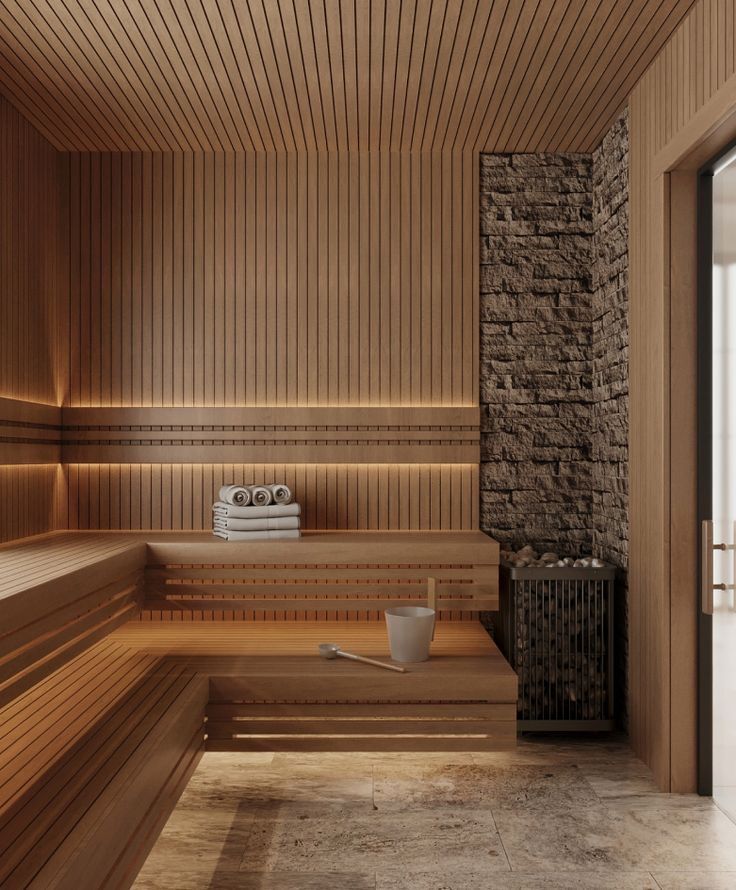
The practice depends on having both a real heat source and a reliable cold source close enough to move between them without losing the momentum of the session. A traditional cedar sauna delivers the heat range the research actually studied, and a cedar cold plunge with a proper chiller holds a consistent cold rather than depending on bags of ice that drift warmer through the session.
Crateworks builds the cedar sauna and cedar cold plunge as a matched pair, sized and finished to sit together, along with the deck, shade, and lighting for the space around them.
Common questions.
- What is contrast therapy?
- Contrast therapy is alternating between heat and cold in the same session, usually a sauna or hot bath followed by a cold plunge or cold shower, repeated for a few rounds. The alternating vascular response, blood vessels dilating in heat and constricting in cold, is the mechanism behind the recovery and mood effects people report.
- How long should a contrast therapy session be?
- A common structure is ten to fifteen minutes of heat, one to three minutes of cold, then rest, repeated for two or three rounds. Total session time usually runs 30 to 45 minutes. Tolerance varies a lot between people, so ease in rather than starting with long rounds in either direction.
- Should you end contrast therapy on hot or cold?
- Either works, and the choice depends on the effect you want. Ending on cold tends to leave you alert, which suits a morning or workout day. Ending on heat is more relaxing and suits an evening wind-down. Most people find their preference through a few sessions rather than following a fixed rule.
- Does contrast therapy interfere with muscle building?
- It can, if timed poorly. Cold immersion right after strength training has been shown in some studies to blunt part of the adaptation signal from that workout, because it dampens the same inflammation the body uses to build muscle. Doing cold on rest days or hours later, rather than straight after lifting, avoids that trade-off.
- Is contrast therapy safe for everyone?
- No. The heat-to-cold swing is a real load on the body. Anyone with a heart condition, uncontrolled high blood pressure, a heart rhythm issue, or who is pregnant should talk to a clinician before starting. Alcohol should not be combined with it, and beginners should never do cold immersion alone.
- Do you need a chiller for the cold side of contrast therapy?
- For consistent results, yes. A chiller holds the plunge at a set cold temperature and filters the water, so it is ready at the same temperature every session rather than drifting warmer as ice melts. Since contrast therapy depends on a real temperature swing, a stable cold side matters as much as the heat side.
Keep reading.
Building a hot-cold setup at home?
Crateworks builds the traditional cedar sauna and cedar cold plunge as a matched pair, with the deck, shade, and lighting to make it a space you actually use.