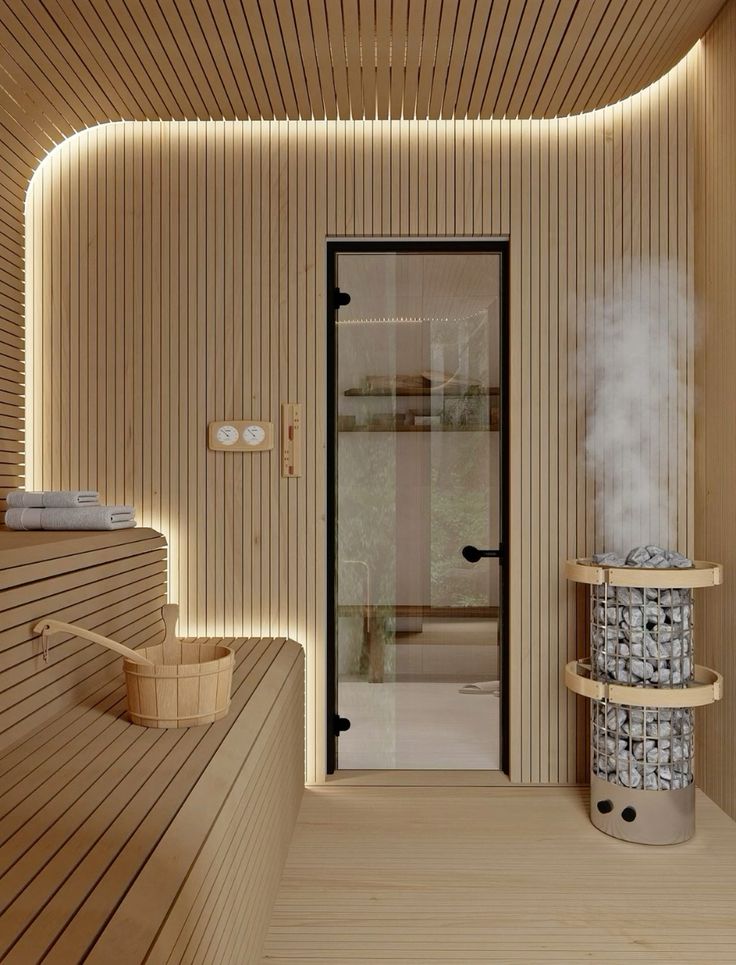
- No plumbing hookup is needed for the sauna itself, but the floor still has to be built right: waterproof substrate, sloped to a drain, with a removable duckboard on top.
- The slope and drain handle runoff from melting ice, sweat, and water tossed on the heater rocks so nothing pools under the boards.
- Duckboard sits above the wet surface and lifts out for cleaning, which is what actually keeps the room from staying damp between sessions.
- Indoor installs add two things an outdoor cabin doesn't need: a vapor barrier behind the cedar and real ventilation, since the room has to dry on its own with no open air around it.
The short version.
Indoor sauna wood doesn't mold when it never sits on a wet floor. The mold risk buyers are picking up on is real, but it comes from one specific mistake: fixed wood flooring nailed straight to bare tile or concrete, no slope, no drain, water pooling under the boards after every session. That's the trap, and it's avoidable with a floor built the way traditional saunas have always been built.
The standard answer is a waterproof floor underneath, tile or sealed concrete, sloped to a drain, with a removable wooden duckboard sitting on top. The duckboard lifts out. You clean it, you dry it, you set it back down. Nothing wood-based stays wet long enough to grow anything.
No plumbing required, but the floor is still a design item.
Traditional sauna is bucket-and-ladle. You carry water in, pour it on the rocks, the löyly hits, and that's the entire water system. No supply line, no rough-in, indoors or out. If someone tells you an indoor sauna needs a water line run to the cabin, they're thinking of a steam room, not a löyly sauna.
A floor drain is a different question, and it's where indoor and outdoor actually diverge. Outdoors, a cabin drains to grade and dries in open air, so trenching a drain rarely pays for itself. Indoors, with löyly splashing water on a warm floor session after session, a drain moves from optional to worth doing, and on a shared or commercial room with a shower or plunge nearby it's close to mandatory.
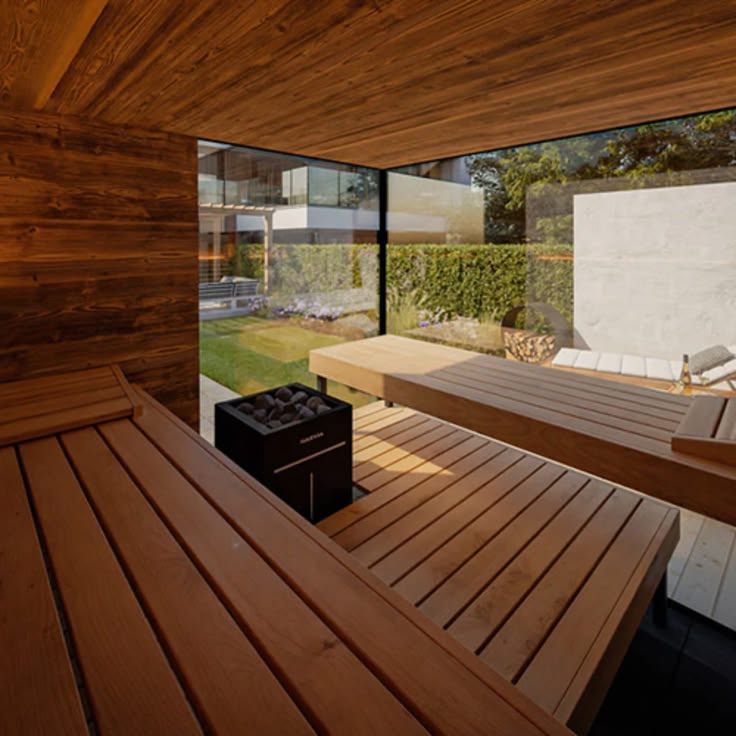
The floor build: substrate, slope, duckboard.
The base layer is waterproof, full stop. Tile over a proper membrane or sealed concrete, never bare subfloor, never anything wood-based load-bearing directly on top of it. That layer gets a slope, even a shallow one, running toward a floor drain so water moves instead of sitting.
The duckboard sits on top of that as a separate, removable piece: a slatted wood grate, gapped enough to drain through and stand on comfortably, built to lift straight out. That's the whole trick. The wood you actually see and stand on is never fastened to the wet layer underneath it. Pull it, hose it, let it dry somewhere with airflow, set it back down.
Crateworks supplies the duckboard with the shell and marks the drain cutout and slope direction on the drawing. The waterproofing, the tile or sealed concrete, and the drain itself are tile and plumbing scope, handled by your contractor.
Why the room dries itself between sessions.
A traditional sauna runs 175 to 210°F depending on how hot you like it. At that temperature the room bakes residual moisture out on its own between uses, the same way a hot oven doesn't stay damp. Löyly dampens the floor and the air near the rocks; it doesn't soak the room the way a steam shower does, because most of the water flashes off the rocks as steam rather than pooling as liquid.
That's the practical difference between a sauna and a steam room, and it's why sauna wood has survived on benches and walls for centuries with no sealant or finish. It's built to take heat, dry fast, and stay untreated. The floor duckboard gets wetter than the walls because that's where water actually lands, which is exactly why it's the one piece built to be pulled out rather than left in place.
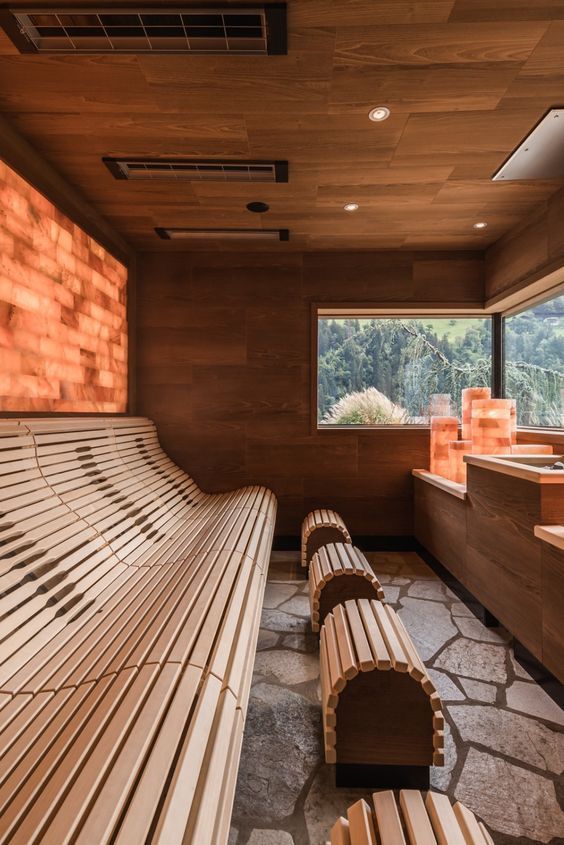
What changes indoors: vapor barrier and ventilation.
Two things get more serious once the sauna is inside a house rather than standing alone in the yard. The vapor barrier behind the cedar, warm-side foil with taped seams and an air gap behind the cladding, matters more indoors because a barrier failure doesn't just damage the sauna. It reaches the wall cavity and the building envelope behind it. Outdoors, a similar leak gets absorbed by a structure that's built to shed water anyway.
Ventilation is the other delta. An outdoor cabin can lean on natural draft, gaps and vents that pull air through on their own. An indoor room needs its own fresh-air inlet and exhaust vent, sized so the air changes about five to six times an hour. The exhaust does not have to be ducted outdoors: the heater manuals allow it to open into the room next to the sauna. Crateworks builds the vent openings and sizing into the shell, sourced direct; any ducting or fan is the contractor's install, along with the electrical and the heater itself.
The floor, layer by layer, and who's responsible for each piece:
| Layer | What it does | Who provides it |
|---|---|---|
| Waterproof substrate (tile or sealed concrete) | Keeps the subfloor from ever seeing standing water | Contractor, tile and waterproofing scope |
| Slope to floor drain | Moves water off the duckboard instead of letting it pool | Contractor, built to the drain cutout on Crateworks' drawing |
| Floor drain | Optional in a dry residential room, advisable once löyly runs indoors | Contractor, plumbing scope |
| Removable wooden duckboard | The surface you stand on; lifts out to dry and clean | Crateworks, ships with the shell |
| Warm-side vapor barrier | Stops moisture from reaching the wall cavity behind the cedar | Crateworks, built into the shell |
| Mechanical ventilation | Exchanges air; indoor rooms need forced draft, not passive vents | Contractor runs the duct and fan; Crateworks sizes and places the vent openings |
Common questions.
- Does an indoor sauna need a floor drain?
- Not always. A dry residential room where water only ever hits the floor by accident can run without one. Once löyly is part of the routine indoors, water lands on the floor every session, and a drain is worth the plumbing scope. On a shared or commercial room with a shower or cold plunge nearby, treat a drain as close to required.
- Does sauna wood mold if it's installed indoors?
- Not if it's built correctly. The only wood that meets water is the duckboard, a removable slatted grate sitting on top of a sloped, waterproof floor, not fixed boards nailed to bare tile. Pull it out, let it dry with some airflow, and it never sits wet long enough to grow anything.
- Do I need to run a water line to an indoor sauna?
- No. A traditional sauna is bucket-and-ladle: you carry water in and pour it on the rocks yourself. There's no supply-line rough-in for the sauna itself, indoors or out. A floor drain is a separate, situational call, not a plumbing requirement for the sauna to function.
- How does the floor stay dry if water gets thrown on the rocks?
- The room runs hot enough, 175 to 210°F, that residual moisture bakes out on its own between sessions. Löyly dampens the floor near the rocks; it doesn't leave the room steam-room wet, because most of the water flashes to steam on the hot rocks rather than pooling as liquid.
- What does Crateworks supply versus the contractor, for an indoor floor?
- Crateworks ships the cedar shell and the removable duckboard, and marks the drain cutout and floor slope on the drawing. The contractor handles the waterproof substrate, the tile or sealed concrete, the drain itself, the electrical, and the heater install.
Keep reading.
Planning an indoor sauna?
Send us the room and we spec the cedar shell and the duckboard, with the drain cutout and floor slope marked on the drawing your contractor builds to.