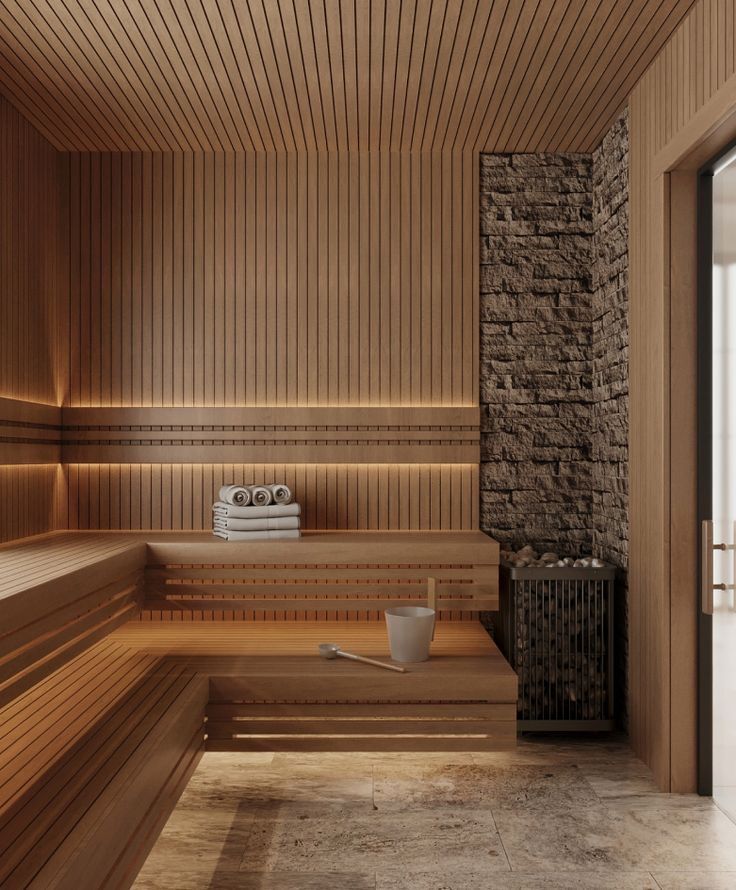
- Finnish (Scandinavian) sauna is the reference point: dry heat from a wood or electric stove, hot rocks, and water splashed on the rocks for loyly steam bursts.
- "Dry sauna" is not a separate type. It is usually just a Finnish sauna run with less water on the rocks, and sometimes the term gets misapplied to infrared, which is a different heat method entirely.
- Banya is the wettest of the wood-heated saunas, run at higher humidity than a standard Finnish sauna but still a wood-and-rock system, not plumbed.
- Steam room and hammam are a different category altogether: tiled, plumbed, moisture-sealed rooms with no wood construction. This is separate from the cedar sauna shells Crateworks sources.
The short version.
Finnish sauna is the reference point everything else gets compared to: a wood-lined cabin, an electric or wood heater with a bed of rocks, low steady heat, and the option to throw water on the rocks for a burst of steam. That is what most people picture when they hear the word, and it is the format the premium and designer market builds around almost without exception.
Everything past that is either a variation on the same wood-and-rocks idea (banya, and "dry sauna" which is not really its own type) or a completely different category that just borrowed the name (steam room, hammam). Knowing which bucket something falls into tells you what materials it needs, what trade builds it, and what the session actually feels like.
Finnish sauna (Scandinavian sauna): the reference point.
A Finnish sauna, the same thing as a Scandinavian sauna, heats the air with an electric or wood-fired heater topped with a bed of rocks. The cabin is solid wood, and the air reaches roughly 150 to 195°F (65 to 90°C) with low, steady humidity, usually somewhere in the 10 to 20% range on a dry run.
Pour water on the hot rocks and you get löyly, a burst of steam that spikes the perceived heat and humidity for a few minutes before the air dries back out. Löyly is the defining ritual of the format. It is also the one thing a steam room and an infrared cabin cannot replicate, since neither has a heated rock bed to pour water on.
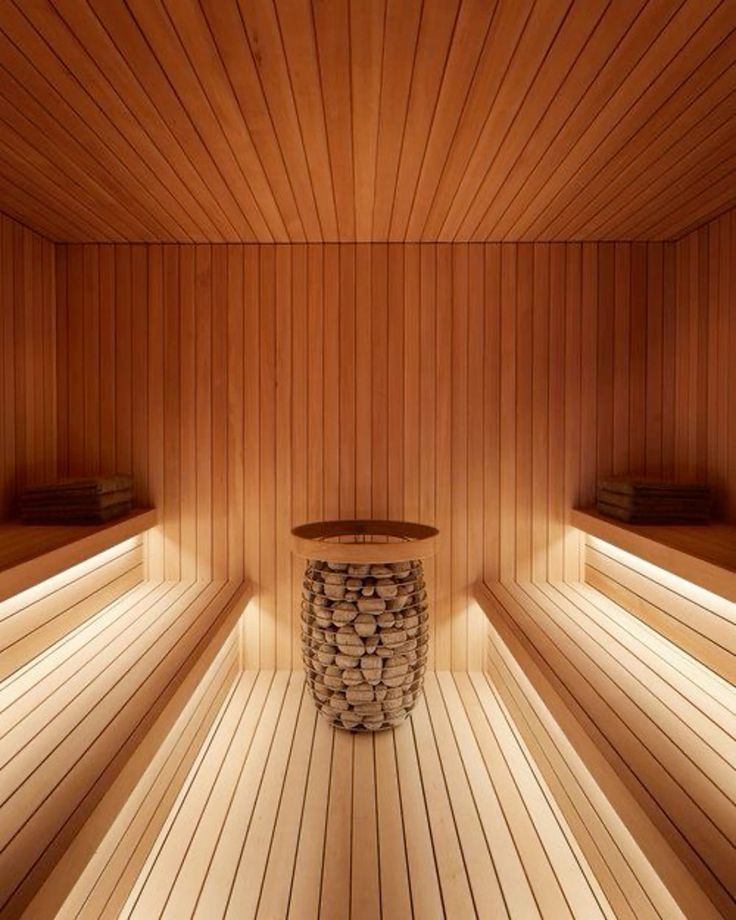
"Dry sauna" is not really its own type.
Most of the time, "dry sauna" just means a Finnish sauna run without pouring water on the rocks. Same cabin, same heater, same rock bed, the person running it is simply skipping löyly. It is a way of using a Finnish sauna, not a different product.
The term also gets used loosely to mean infrared, which genuinely is a different technology: panels that warm your body directly rather than hot air that warms the room. Infrared runs cooler, produces no steam at all, and belongs in its own conversation, not lumped in as a Finnish sauna variant. If someone says "dry sauna," it is worth asking which one they mean, because it changes what is actually being built or bought.
Banya: the wettest of the wood-heated saunas.
A banya is the Russian and Eastern European relative of the Finnish sauna, wood-lined and heated the same basic way, with a stove and a bed of rocks. The difference is in how it is run: more water goes on the rocks throughout the session, ambient humidity climbs well above a Finnish sauna's low-steady range, and the peak temperature generally sits cooler, in the 140 to 170°F (60 to 75°C) range.
The other defining feature is the venik, a bundle of birch or oak leaf branches used to gently strike the skin as part of the session, a practice with centuries of tradition behind it. Banyas were traditionally wood-fired more often than electric. It is a close cousin of the Finnish sauna, built the same way from the same materials, just tuned wetter, cooler, and toward a different ritual.
Steam room and hammam: a different category, and what Crateworks builds.
A steam room or hammam is not a wood sauna at all. It runs on a plumbed steam generator instead of a heater and rocks, holds close to 100% humidity at a lower temperature, roughly 110 to 120°F (43 to 49°C), and is built entirely from tile, glass, and stone. Wood has no place in that environment, since sustained near-saturation humidity is exactly what wood cannot tolerate long-term. It is a plumbing and waterproofing build, not a carpentry one, and the trades that build it barely overlap with the trades that build a sauna.
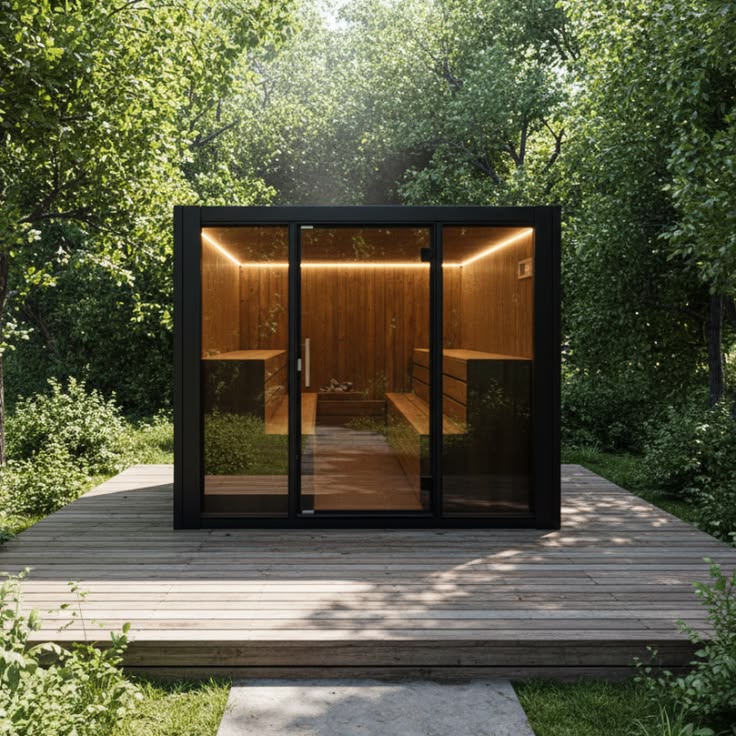
Crateworks builds the Finnish tradition: a clear Western Red Cedar cabin, solid wood with no adhesive in the heated chamber, spec'd for indoor or outdoor placement. The heater is a name-brand unit, Harvia or an equivalent premium make, specified and installed locally by a licensed contractor, since that is electrical work we do not touch. Materials are sourced direct. We do not build steam rooms or hammams, and we do not run a banya whisk program. If a project needs one of those, that is a different scope with a different trade behind it.
How the four formats actually differ, side by side:
| Type | How it heats | Humidity | Typical heat | Wood or tile |
|---|---|---|---|---|
| Finnish / Scandinavian sauna | Wood or electric heater with a rock bed; water thrown on the rocks for löyly steam | Low and steady (roughly 10-20%), brief spikes during löyly | 150 to 195°F (65 to 90°C) | Solid wood cabin |
| "Dry sauna" (not a separate build) | Same Finnish sauna, just run without pouring water on the rocks | Low and flat, no löyly spike | 150 to 195°F (65 to 90°C) | Solid wood cabin |
| Banya (Russian sauna) | Wood-fired stove and rock bed, more water used through the session | Higher and more humid than Finnish | 140 to 170°F (60 to 75°C) | Solid wood cabin |
| Steam room / hammam | Plumbed steam generator, no rocks | Close to 100% | 110 to 120°F (43 to 49°C) | Tile, glass, and stone; no wood |
Common questions.
- What is löyly?
- Löyly is the burst of steam you get when you pour water on the hot rocks in a Finnish sauna heater. It spikes the perceived heat and humidity for a few minutes before the air dries back out, and it is the part of the ritual that separates a Finnish sauna from every other type. Steam rooms and infrared cabins cannot produce it because neither one has a heated rock bed.
- Is a dry sauna a different type of sauna?
- Not usually. "Dry sauna" most often just means a Finnish sauna run without pouring water on the rocks, same cabin, same heater, no löyly. Some people also use the term loosely to mean infrared, which is a genuinely different technology. Worth asking which one someone means before assuming, since the answer changes what you are actually buying.
- What is the difference between a sauna and a steam room?
- A sauna, whether Finnish or banya, heats the air with a wood or electric heater and a bed of rocks, and the chamber is built from solid wood. A steam room or hammam runs on a plumbed steam generator with no rocks and no wood at all, since wood cannot hold up to sustained near-100% humidity. They also run at different temperatures: a Finnish sauna is typically 150 to 195°F with low steady humidity, a steam room is closer to 110 to 120°F at close to full saturation.
- Is a banya the same as a Finnish sauna?
- They are related but not the same. Both are wood-heated, wood-lined chambers with a rock bed, but a banya runs cooler and wetter, with more water used through the session and a birch whisk (venik) worked into the ritual. A Finnish sauna runs hotter with lower, steadier humidity and shorter bursts of steam from löyly.
- Which type does Crateworks build?
- Traditional Finnish sauna in clear Western Red Cedar, solid wood with no adhesive in the heated chamber, built indoor or outdoor and spec'd to the space. The heater is a name-brand unit, Harvia or an equivalent premium make, specified and installed locally by a licensed contractor. We do not build steam rooms or hammams, since those are a plumbing and waterproofing job, not a carpentry one, and we do not run a banya whisk program.
Keep reading.
Building a Finnish sauna?
Send the space, indoor or outdoor, and we spec a clear-cedar Finnish sauna to it, heater and all, sourced direct and built as part of a wellness package or on its own.