
- Contrast therapy is the shift itself: high heat in the sauna followed by cold immersion near 50F, back and forth, not either extreme held on its own.
- A basic session is 15-20 minutes of sauna heat, then 1-3 minutes in the cold plunge, repeated for 2-3 rounds with a short rest between.
- Outdoors, the sauna and plunge sit as two separate structures close enough for a quick walk between them, cedar cabin on one side, tub or barrel on the other, not one combined enclosure.
- The setup lives or dies on three things: heater output sized to the cabin, a plunge with real cold (chiller or reliable fill), and enough clear path between the two to make the walk practical.
What contrast therapy is.
Contrast therapy means cycling between heat and cold in the same session. You warm through in the sauna, then move to the cold plunge for a short immersion, then rest, and repeat. The appeal is the sharp swing between the two states and how you feel after a few rounds.
People pursue it for recovery, alertness, and the ritual itself. The research is still developing and the strongest claims belong to a clinician, not a product page, so treat the wellness framing as context, not a medical promise.
A simple session structure.
A common approach is a few rounds of heat then cold. Warm through in the sauna for ten to fifteen minutes, then a short cold immersion of one to three minutes, then rest until your breathing settles, then repeat for two or three rounds. Most people finish on cold or on a rest, and listen to their body throughout.
There is no single correct protocol, and tolerance varies a lot from person to person. Ease into the cold, keep the sessions sensible, and check with a clinician first if you have any cardiovascular condition, since the heat-to-cold swing is a real load on the body.
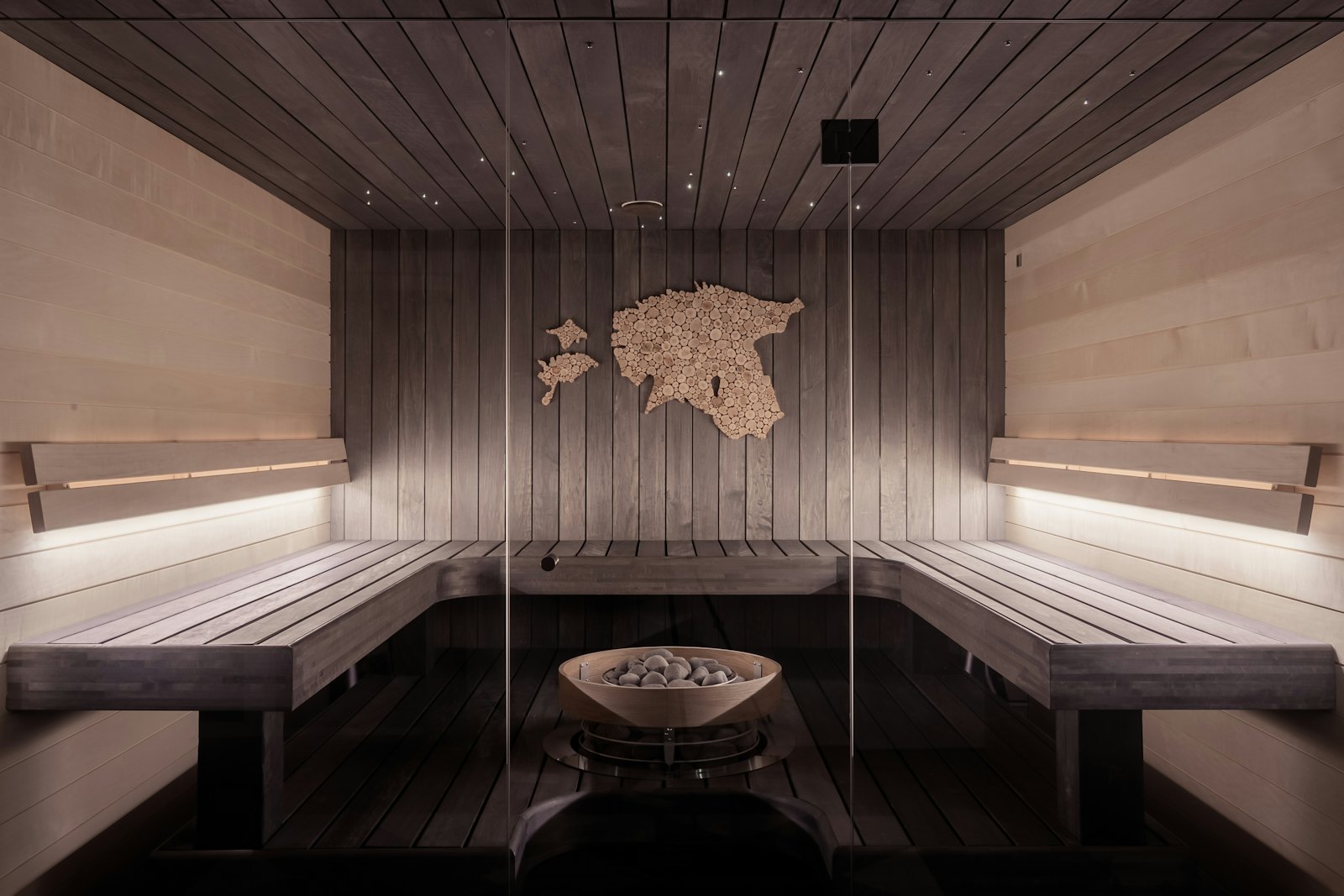
Building the space outdoors.
The reason sauna and cold plunge increasingly get designed together is that the experience wants a setting. A traditional cedar sauna, a cedar cold plunge with a proper chiller, a deck that ties them together, shade or an awning overhead, and ambient lighting turn two appliances into an outdoor wellness destination. Designed as one project, it reads as a destination; bought piecemeal, it reads as clutter.
That is the difference between specifying a sauna and specifying a space. The deck level, the distance between hot and cold, the shelter, and the lighting all shape how the place actually gets used.
The components that matter.
The sauna should be a traditional cedar cabin with a name-brand heater. The cold plunge should pair a cedar tub with a real chiller so the water holds temperature reliably, since the chiller is the part that runs continuously and has to last. The deck should be composite, which shrugs off the constant water without the upkeep wood needs. Each component is a real product decision, not an afterthought.
Crateworks sources the full outdoor wellness package: traditional cedar sauna, cedar cold plunge with a premium chiller, composite decking, furniture, shade, and lighting, designed and coordinated as one project rather than assembled from separate suppliers.
Common questions.
- How long should you stay in a sauna and cold plunge?
- A common pattern is ten to fifteen minutes in the sauna, then one to three minutes in the cold plunge, then rest, repeated for two or three rounds. There is no single correct protocol and tolerance varies, so ease into the cold and keep sessions sensible. Check with a clinician first if you have a heart condition.
- Do you need a chiller for a cold plunge?
- For consistent cold and clean water, yes. A chiller holds the plunge at a set temperature and circulates and filters the water, so it is ready whenever you are. Without one, you are managing ice and temperature manually. The chiller runs continuously, so it is worth specifying a quality unit.
- Can a sauna and cold plunge go outdoors together?
- Yes, and increasingly they are designed that way. An outdoor setup pairs a traditional cedar sauna and a cedar cold plunge on a deck with shade and lighting, designed as one space. Planning them together gets the spacing, levels, and shelter right rather than retrofitting around two separate purchases.
Keep reading.
Designing an outdoor wellness space?
Send the backyard and we design the full package: traditional cedar sauna, cold plunge, deck, shade, and lighting, coordinated as one project.