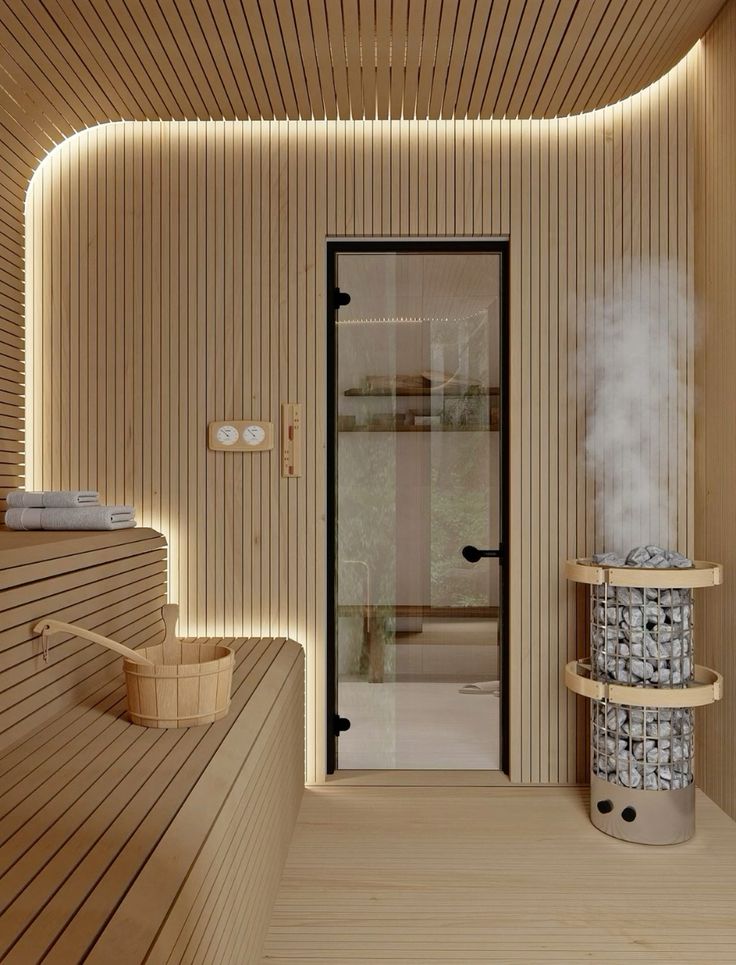
- Western Red Cedar is the benchmark because it resists heat and humidity on its own, stays cool to the touch, and has low resin so it will not off-gas at sauna temperatures.
- Hemlock and spruce are legitimate lower-cost picks when kiln-dried and clear-graded, just expect a hotter surface feel and less rot tolerance if moisture ever gets behind the boards.
- Species is not the deciding factor, construction is: vapor barrier placement, ventilation, and clearance behind the paneling determine whether any wood holds up over years of heat cycling.
- A premium cedar shell built with poor ventilation or a missing vapor barrier will fail faster than a correctly built hemlock or spruce room.
What does sauna wood actually need to do?
A sauna cycles between hot and humid and cool and dry, over and over. Wood that moves too much under that cycling will cup, split, or loosen at the joints. The wood also has to stay comfortable against bare skin at 180°F, which rules out anything dense that conducts heat. And because the cabin gets hot, anything in the wood or holding it together can off-gas, so the material has to be stable at temperature.
Softwoods win here because they are light, low-conducting, and dimensionally stable when properly dried. The question is which softwood, and how it is put together.
Why is Western Red Cedar the benchmark sauna wood?
Western Red Cedar is the premium standard for sauna interiors. It is naturally rot and moisture resistant, dimensionally stable through heat cycling, low-conducting so it stays touchable, and it carries the warm aromatic scent people associate with a real sauna. Clear, knot-free cedar is the top grade; it has no knots to bleed sap or create hot spots, and it reads as a premium material at a glance.
Not all cedar is equal. Knotty or structural-grade cedar costs less but brings sap pockets and a busier look. The wood's origin matters too: Crateworks specs clear Western Red Cedar with a traceable supply chain back to British Columbia, which is the grade and provenance the high end is built on.
What about hemlock, spruce, and other sauna wood options?
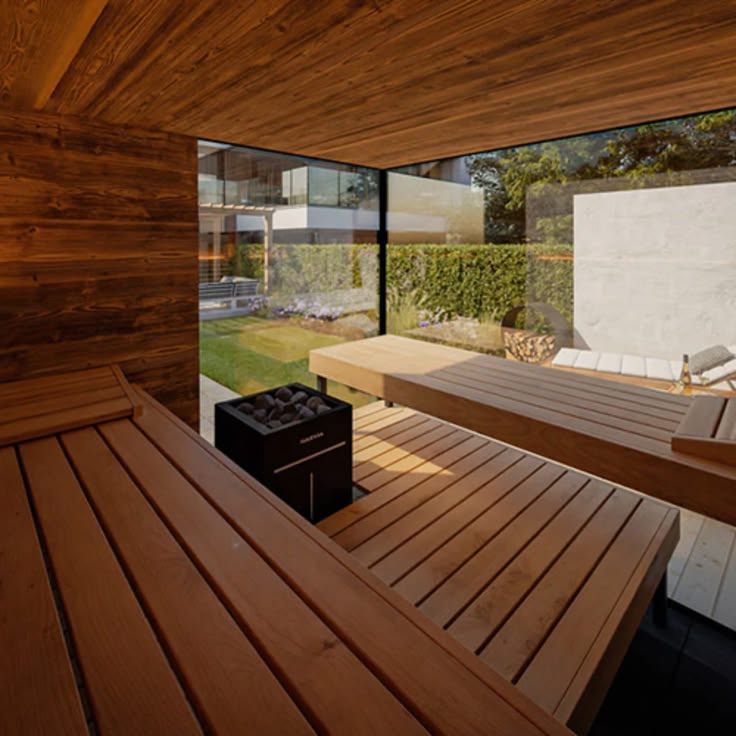
Canadian Hemlock is the common step down: stable, pale, nearly odorless, and cheaper than cedar. It performs fine, but it lacks cedar's scent and natural resistance, and it does not carry the same premium read. Nordic Spruce is the value tier, light and serviceable but knottier and plainer. Basswood and aspen show up in some interiors for their pale color and very low scent, useful for people sensitive to cedar aroma.
For a premium build, cedar is worth the step up. The cost difference between a value species and clear cedar is real but small against the total project, and the cedar is the part you see, smell, and touch every session.
Does sauna construction matter more than the wood species?
Species is the easy question. The harder one is how the cabin is assembled, because that is where off-gassing actually comes from. A sauna built from engineered panels, plywood, or MDF behind a thin wood veneer can hold formaldehyde-based adhesives that release fumes at sauna temperature. The veneer looks like solid wood; the core is not.
The honest build is solid wood through and through. Crateworks specs cabins with solid cedar wall strips fixed mechanically rather than glued, and mortise-and-tenon joinery on the frames and benches, so there is no adhesive in the heated chamber. No engineered panel, no plywood, no MDF, no formaldehyde glue where the heat is. That is a spec you can verify, not a slogan, and it is the thing a veneer-over-particleboard cabin cannot match.
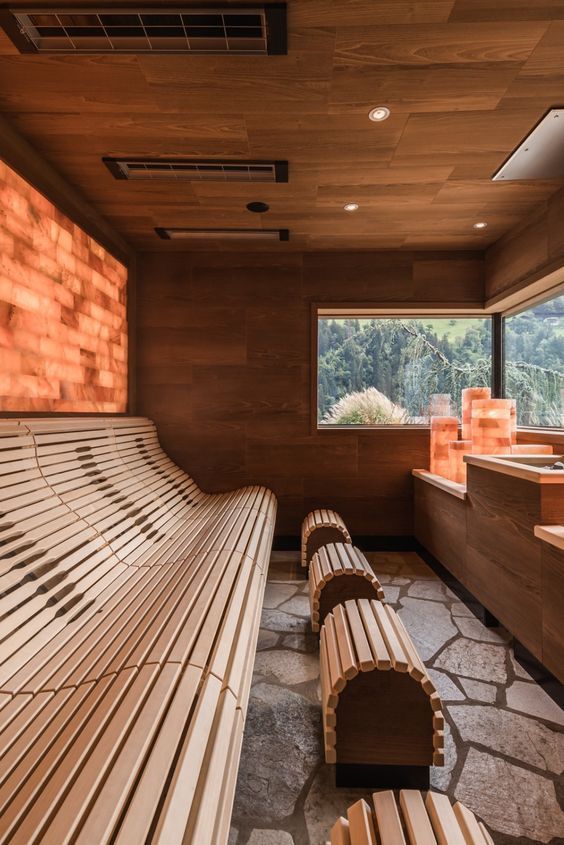
How the common sauna woods compare:
| Wood | Scent | Resistance / stability | Tier |
|---|---|---|---|
| Clear Western Red Cedar | Warm, aromatic | Excellent | Premium |
| Knotty cedar | Aromatic, sap risk | Very good | Mid |
| Canadian Hemlock | Low / neutral | Good | Mid value |
| Nordic Spruce | Light | Good, knottier | Value |
| Aspen / Basswood | Very low | Good | Low-scent option |
Common questions.
- Is sauna wood toxic?
- The wood species itself is not the issue; the adhesives can be. Saunas built from plywood, MDF, or engineered panels behind a veneer can hold formaldehyde-based glues that off-gas at sauna temperature. A cabin built from solid wood with mechanical fixing and mortise-and-tenon joinery, with no adhesive in the heated chamber, avoids that entirely. Ask what the cabin is actually made of behind the surface.
- Why is cedar the best wood for a sauna?
- Western Red Cedar is naturally rot and moisture resistant, stable through repeated heat cycling, low-conducting so it stays cool to the touch, and aromatic. Clear, knot-free cedar is the top grade. Those properties together are why it is the premium benchmark for sauna interiors.
- Is hemlock or cedar better for a sauna?
- Both perform. Hemlock is stable, pale, and nearly odorless, and it costs less. Cedar adds natural resistance, the classic scent, and a clear premium read. For a value build hemlock is fine; for a premium sauna cedar is worth the step up because it is the surface you see, smell, and touch every session.
Keep reading.
Want a real cedar sauna?
We build traditional saunas in clear Western Red Cedar with solid-wood construction and no adhesive in the heated chamber. Send your space to start.