
- A 20-year Finnish cohort study found men using a sauna 4 to 7 times a week had a 63% lower risk of sudden cardiac death than once-a-week users, with benefit rising at every step up in frequency.
- Sessions in the research ran about 15-20 minutes at 174-194 F (79-90 C); new users should start around 10-12 minutes and build up.
- You don't need to hit 4-7 sessions a week to benefit. 2-3 times a week already beats once a week, which already beats none.
- This is general health information, not medical advice. Talk to your doctor before starting a routine if you have a cardiovascular condition, are pregnant, or take medication that affects heat tolerance.
What does the research actually say about sauna frequency?
The most-cited data point comes from a 20-year study out of Eastern Finland, tracking 2,315 middle-aged men through the Kuopio Ischaemic Heart Disease Risk Factor cohort. Researchers split participants into three groups by how often they used a sauna: once a week, 2 to 3 times a week, and 4 to 7 times a week. Men in the 4-to-7 group had a 63 percent lower risk of sudden cardiac death compared to the once-a-week group, and the same study tracked lower rates of fatal coronary heart disease and death from any cause as frequency climbed.
That's a dose-response pattern, not a threshold. The data doesn't say sauna use does nothing until you hit 4 sessions a week and then suddenly works. It says more frequent, moderate heat exposure tracked with better outcomes at every step up, in a population that grew up using sauna as a normal part of the week rather than an occasional spa treatment.
How long should a sauna session actually last?
In the frequency studies, sessions ran roughly 15 to 20 minutes, often split into two shorter rounds with a cool-down break in between, at temperatures in the 174 to 194 degree Fahrenheit range (79 to 90 Celsius). That's a reasonable target for someone acclimated to regular sauna use. It is not a starting point.
If you're new to it, 10 to 12 minutes is plenty for a first few sessions. Length matters less than consistency early on. A short session three times a week beats a brutal 25-minute session once and then skipping the next two weeks because you overdid it.
How do you build up to 4 to 7 sessions a week without burning out on it?
Nobody starts at daily use. A practical ramp looks like: 1 to 2 sessions a week for the first two to three weeks at shorter duration, moving to 3 to 4 sessions a week once you know how your body responds, and only pushing toward daily use if it fits your schedule and you're not fighting fatigue or dehydration to get there.
Hydration is the part people skip. A sauna session runs a real fluid loss, and stacking sessions on top of dehydration is where people start feeling rough, not from the heat exposure itself. Water before, water after, and skipping alcohol around session time solves most of the complaints people report.
Does frequency matter more than heat, humidity, or session length?
Based on the available research, frequency and consistency carry more weight than any single session's intensity. A moderate, repeatable routine several times a week outperforms an occasional extreme session in terms of the outcomes tracked in the cohort data. This tracks with how most other cardiovascular and recovery interventions work: repeated moderate stress the body adapts to beats occasional maximal stress it just tolerates.
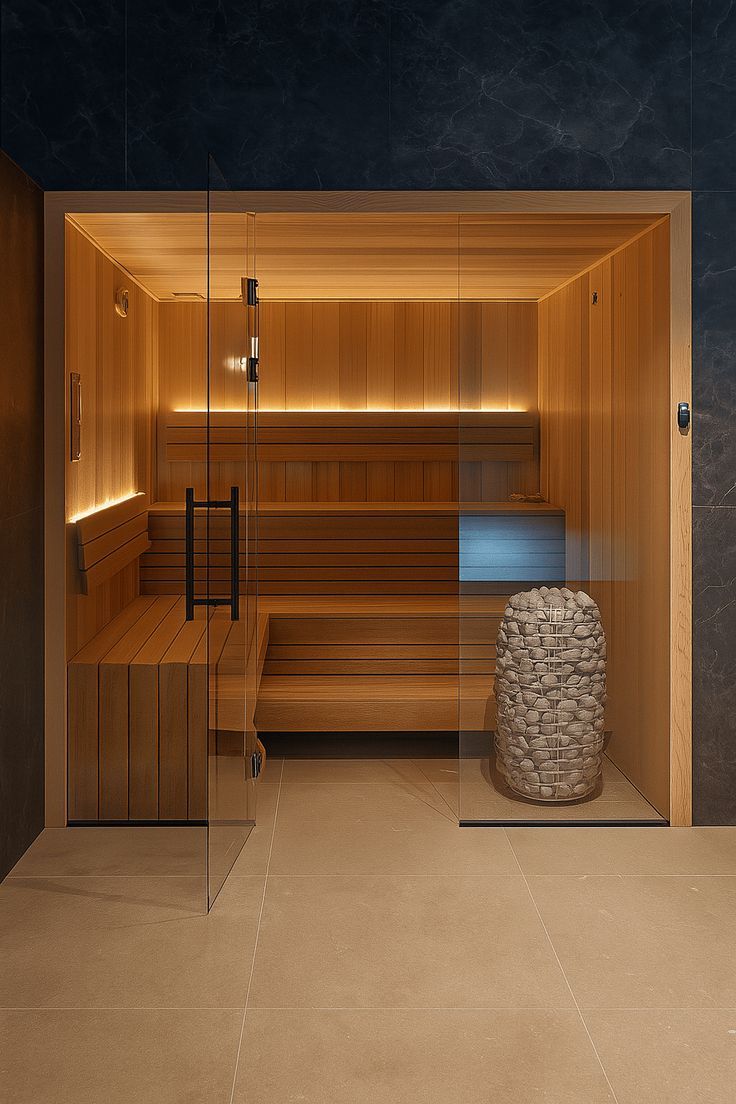
That's also the practical argument for building sauna access into the house instead of treating it as a destination. A sauna you have to drive to or book time in gets used once a week if you're disciplined. A sauna in the basement, garage, or backyard gets used because it's there.

A rough frequency ladder based on the cohort research. Use it as a general guide, not a prescription, and check with your doctor if you have a cardiovascular condition or you're pregnant.
| Frequency | Typical session length | What the research associates it with |
|---|---|---|
| Less than 1x/week | 10-15 min | Baseline comparison group in most studies; minimal tracked benefit |
| 1x/week | 15-20 min | Reference point most cohort studies compare against |
| 2-3x/week | 15-20 min | Meaningfully lower cardiovascular risk vs. once-a-week use |
| 4-7x/week | 15-20 min | Largest tracked benefit, including a 63% lower risk of sudden cardiac death vs. once-a-week use |
Common questions.
- Is it bad to use a sauna every day?
- No published research flags daily sauna use as harmful for healthy adults. The Finnish cohort data that shows the strongest benefit (4 to 7 sessions a week) includes people using a sauna essentially daily. The caveat is hydration and knowing your own limits, not a hard cap on frequency.
- How long should each sauna session last?
- Most of the research behind the frequency findings used sessions in the 15 to 20 minute range at temperatures around 174 to 194 degrees Fahrenheit (79 to 90 Celsius), often broken into two rounds with a cool-down break between. That is a reasonable target once you are acclimated. New users should start shorter, around 10 to 12 minutes, and build up.
- Do I need to hit 4 to 7 sessions a week to get any benefit?
- No. The same body of research shows a dose-response pattern: 2 to 3 sessions a week already beat 1 session a week, which already beats none. Four to seven is where the largest effect shows up, but every step up in frequency tracked with better outcomes. One or two sessions a week is a legitimate, sustainable starting point.
- Does infrared sauna carry the same frequency benefits as traditional sauna?
- The frequency research (Laukkanen and colleagues) was done in traditional Finnish saunas, not infrared cabins. Infrared users report similar subjective heat-exposure and relaxation effects, but the specific mortality data doesn't cover infrared directly. If the cardiovascular findings are your main motivation, traditional sauna is the better-documented choice.
- Can I use a sauna if I have a heart condition or I'm pregnant?
- Talk to your doctor first. This article is general information, not medical advice, and sauna use isn't appropriate for everyone, including people with unstable cardiovascular conditions, certain medications, or during pregnancy without a physician's sign-off.
Sources.
- Laukkanen T, Khan H, Zaccardi F, Laukkanen JA. Association Between Sauna Bathing and Fatal Cardiovascular and All-Cause Mortality Events. JAMA Internal Medicine, 2015.
- Cleveland Clinic — Get Your Sweat On: The Benefits of a Sauna
For general information only, not medical advice. Ask a clinician before starting regular sauna use.
Keep reading.
Build sauna time into the house, not just the routine
Crateworks builds cedar sauna shells and wellness-room packages direct, sized for real frequency use, indoor or outdoor. Heater is a name-brand unit installed locally by your licensed electrician; we handle the shell, bench, and build spec.