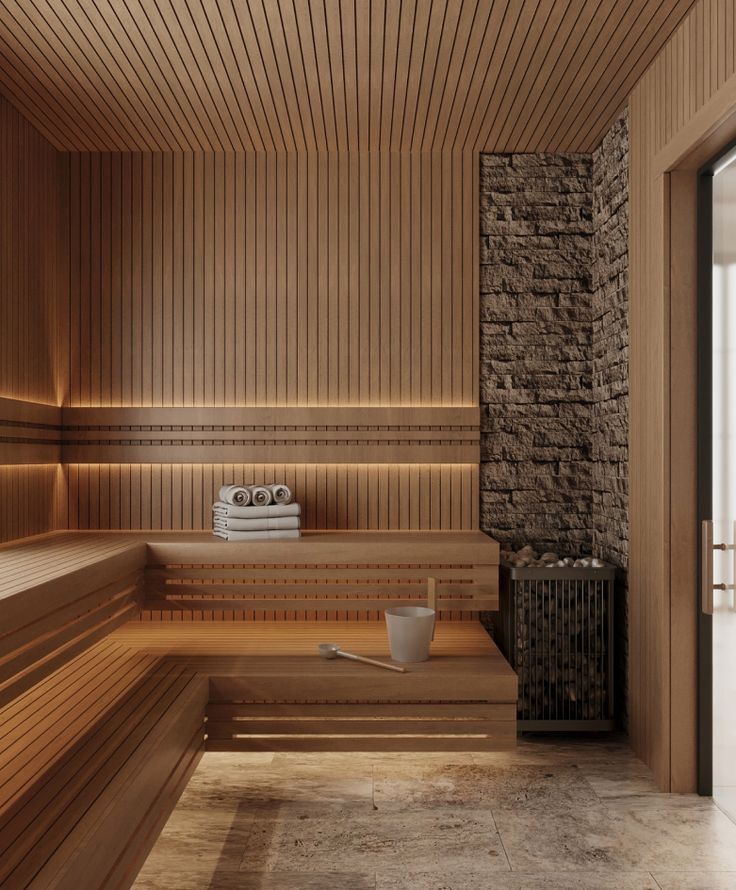
- A traditional sauna heater runs on 240 V, hardwired by a licensed electrician on a circuit of its own. A 9 kW heater draws 37.5 A and HUUM specifies a 50 A breaker and 8 AWG copper wire.
- You cannot plug a traditional sauna into a regular outlet. A 120 V, 15 A circuit tops out at 1,800 W, and even Harvia's smallest 120 V stone heaters must be hardwired.
- A session with a 9 kW heater uses about 11 kWh. At the US average residential rate in July 2026, that is about $2.06.
- Wire size changes by brand, so the electrician works from the manual for the heater you actually buy.
Amps, breaker and wire by heater size.
These are the figures heater makers print in their US installation manuals, at 240 V. Your electrician confirms them against the manual for your heater and your local code.
Wire gauge is not the same across brands at the same size. At 6 kW, HUUM specifies 10 AWG and Harvia's Cilindro manual specifies 12 AWG. That is why the electrician works from the heater's own manual rather than a general chart.
Why 240 V.
Current is power divided by voltage. A 9 kW heater on 240 V draws 37.5 A. The same heater on 120 V would draw 75 A, which no household circuit is built for.
Some buildings, often commercial ones, have 208 V instead of 240 V. The heater still works but puts out less heat. HUUM's 9 kW heater runs at 6.75 kW on 208 V. Check the supply before you choose the heater size.
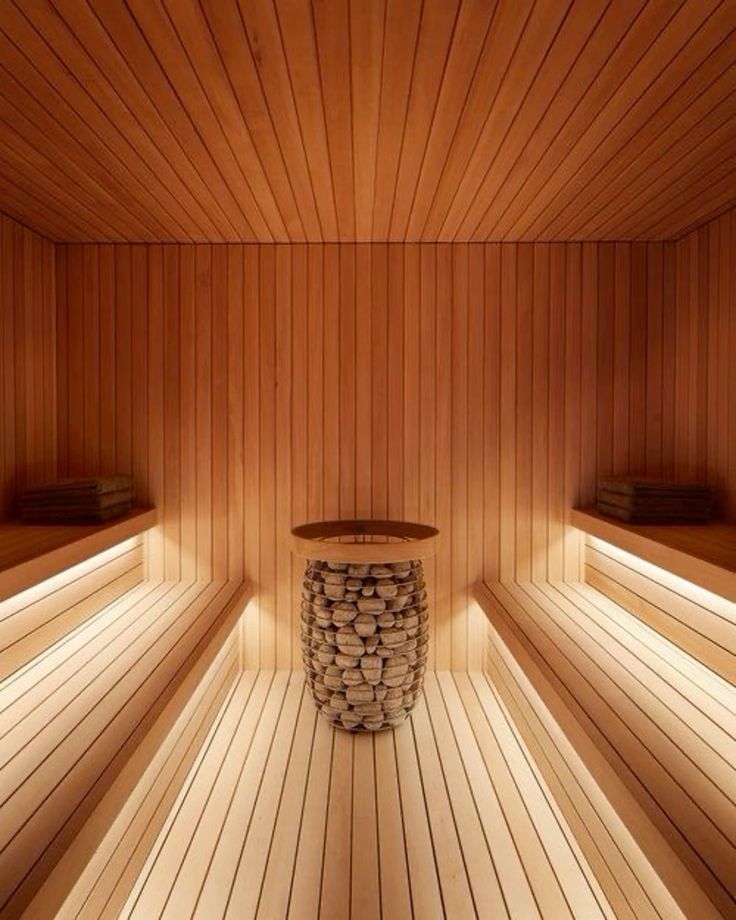
Can you plug a sauna into a regular outlet?
Not a traditional sauna. A standard 120 V, 15 A circuit tops out at 1,800 W. A 6 kW heater would need 50 A at 120 V.
The smallest 120 V stone heaters we found are Harvia's Vega Compact models at 1.7 and 1.9 kW, sized for a room of roughly 70 to 106 cubic feet, about the size of a closet. Even those are not plug-in: Harvia's manual says the heater must be permanently installed in conduit, and plugs are not allowed in the sauna room.
If a sauna is sold as plug-and-play on a household outlet, check whether it is an infrared unit, which is a different product with no stones and no steam.
A circuit of its own, wired by a licensed electrician.
HUUM's manual says only a certified electrician may connect the heater to the power supply. Harvia's says the wiring must be done by a licensed electrician and the heater permanently installed, never on a plug.
Plan on a dedicated circuit. Coldture's published spec for its 9 kW sauna calls for a dedicated branch circuit, and the Canadian Electrical Code gives any heating device over 30 A its own branch circuit. Every heater from about 7.5 kW up is over that line.
The circuit needs an electrical permit almost everywhere. Our permit guide covers who issues it in the US and Canada.
What a sauna adds to the electric bill.
Most of the energy goes into heating the room, not keeping it hot. HUUM and Harvia both say a properly insulated sauna takes about an hour to reach temperature. After that the thermostat cycles the heater on and off.
A worked example with a 9 kW heater: one hour of heat-up at full power is 9 kWh. A 30-minute session with the heater cycling about half the time adds 2.25 kWh, for 11.25 kWh in total. The half-time figure is an estimate from a sauna retailer, not a measurement; a colder room runs the heater more.
At the US average residential rate of 18.31 cents per kWh in July 2026, that session costs about $2.06. Three sessions a week, about 13 a month, comes to roughly $27. In Canada the same session costs about C$0.93 in Montreal, C$1.75 in Toronto, C$2.48 in Edmonton and C$2.58 in Calgary, at the 2025 rates Hydro-Québec publishes for those cities.
Because the heat-up hour is most of the cost, a short session costs almost as much as a long one. Insulation shortens the heat-up, which is where the savings are.
Canada.
The supply is the same 240 V single phase. The code is the Canadian Electrical Code, CSA C22.1, rather than the US National Electrical Code.
The Canadian code also calls for the sauna heater to be controlled by a timer that cuts it off after a maximum of one hour. Your electrician will confirm how your heater's controls meet that.
Heater size against current, breaker and wire, at 240 V, as printed in the HUUM and Harvia US installation manuals.
| Heater | Current at 240 V | Breaker | Copper wire |
|---|---|---|---|
| 4.5 kW (HUUM DROP 4) | 18.75 A | 30 A | 10 AWG |
| 6 kW (HUUM DROP 6) | 25 A | 30 A | 10 AWG (Harvia Cilindro: 12 AWG) |
| 7.5 kW (HUUM DROP 7) | 31.25 A | 40 A | 8 AWG |
| 9 kW (HUUM DROP 9) | 37.5 A | 50 A | 8 AWG |
| 10.5 kW (Harvia Cilindro) | 43.75 A | Not stated in the manual | 6 AWG |
Common questions.
- Do you need a 220 line for a sauna?
- Yes, for a traditional sauna. The heater runs on 240 V (often called 220), hardwired by a licensed electrician on a circuit of its own. A 9 kW heater draws 37.5 A; HUUM specifies a 50 A breaker and 8 AWG copper for it.
- Can I plug a sauna into a regular outlet?
- Not a traditional sauna. A 120 V, 15 A circuit tops out at 1,800 W, far below a normal sauna heater. Even Harvia's smallest 120 V stone heaters, sized for a closet, must be hardwired, and plugs are not allowed in the sauna room.
- Do saunas increase the electric bill?
- A little. A session with a 9 kW heater uses about 11 kWh, mostly in the first hour of heating. At the July 2026 US average rate of 18.31 cents per kWh that is about $2.06 a session, or roughly $27 a month at three sessions a week.
- What size breaker does a sauna need?
- It depends on the heater. HUUM specifies 30 A for its 4.5 and 6 kW heaters, 40 A for 7.5 kW and 50 A for 9 kW, all at 240 V. Your electrician works from the manual for your heater.
- Does a sauna need its own circuit?
- Plan on it. Heater makers require a hardwired connection by a licensed electrician, Coldture's published spec calls for a dedicated branch circuit, and the Canadian Electrical Code gives any heating device over 30 A its own branch circuit.
Sources.
- HUUM DROP 2.0 US user manual: current, breaker and wire by heater size; electrician requirement; heat-up time
- Harvia Cilindro US manual: 6 to 10.5 kW ratings, conduit, no plugs in the sauna room
- Harvia Vega Compact US manual: 1.7 and 1.9 kW 120 V heaters, room volume, installation
- Coldture XTREME outdoor sauna: published electrical specification
- Electrical Industry News: Canadian Electrical Code rules for saunas and heating devices (62-114, 62-222)
- Finnmark Sauna: running cost of an electric sauna heater (duty cycle estimate)
- US Energy Information Administration: average residential electricity price, Table 5.6.A
- Hydro-Québec: Comparison of Electricity Prices in Major North American Cities, 2025
For general information only, not medical advice. Ask a clinician before starting regular sauna use.
Keep reading.
Get the heater and circuit specified for your room.
Send the room dimensions and the electrical supply at the sauna wall. We spec the heater and give your electrician the numbers.