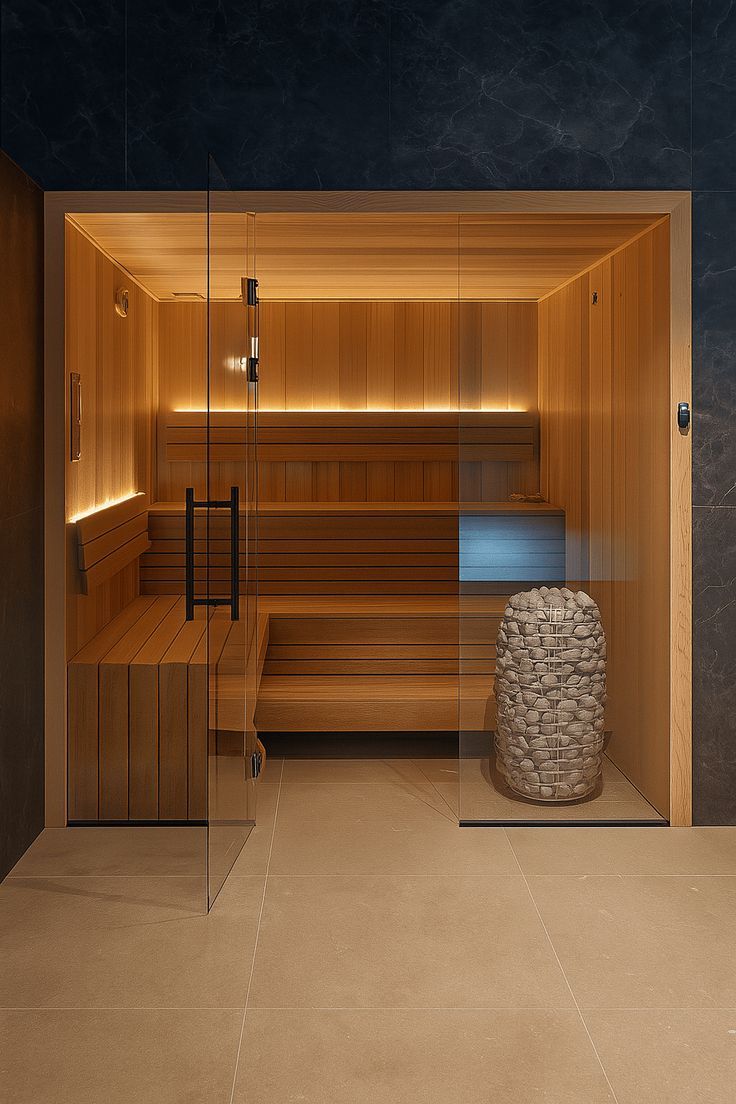
- A sauna is dry, high heat (150 to 195°F) from a heater and rocks; a steam room is near-100% humidity at a lower temperature from a plumbed generator.
- A sauna is the simpler, cheaper build and needs no plumbing; a steam room needs a water line, a floor drain, and full waterproofed tile.
- A sauna is far easier to keep mold-free because its own heat dries it out between sessions; a steam room's tile and grout need regular cleaning.
- Pick a sauna for a dedicated room, indoor or outdoor, with no plumbing nearby; pick a steam room next to a bathroom that already has plumbing run.
How a sauna and a steam room actually heat you.
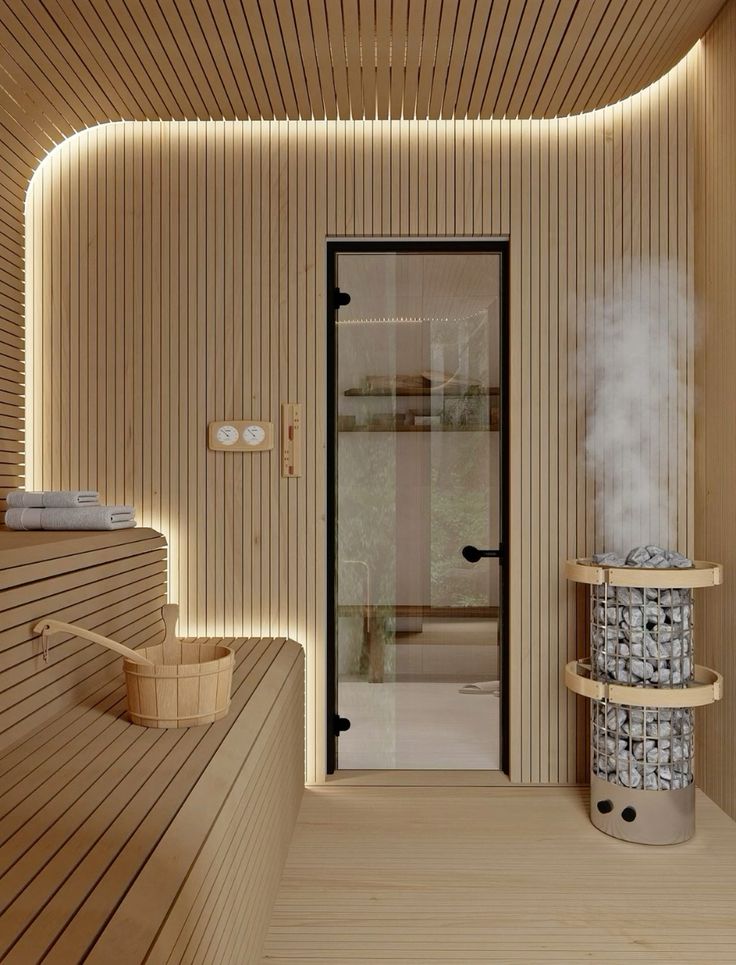
A sauna's heater warms a bank of rocks, and the rocks radiate heat into the room until the whole cabin reaches temperature. The air stays relatively dry through most of a session. Pour water on the hot rocks and you get löyly, a short burst of steam that spikes the humidity and the perceived heat before it dissipates. That controlled, on-demand steam is unique to a sauna with a heater and rocks.
A steam room works the opposite way. A steam generator, plumbed to a water line and wired to a control panel, pipes continuous steam into a sealed enclosure until the room sits at close to 100% humidity. There's no rock bed and no dry phase, the air stays saturated for the entire session at a lower 110 to 120°F, because saturated air at sauna temperatures would be dangerous to breathe.
The body experience: dry heat vs saturated heat.
A sauna's dry heat lets you tolerate a much higher temperature, the air doesn't hold much moisture so sweat evaporates and cools you as you sit. Löyly changes that briefly, the humidity spike after a water pour makes the same air temperature feel noticeably hotter for a few minutes.
A steam room's saturated air sits at a lower temperature but sweat can't evaporate, so the heat feels heavier and more enveloping the entire time. Some people prefer that constant, all-over humidity; others find the higher dry heat of a sauna easier to sit in for longer. Neither format is medical advice, and if a specific health condition is driving the decision, that's a conversation for a doctor, not a spec sheet.
Build and maintenance: solid wood vs sealed tile.
A steam room is built to hold standing humidity indefinitely: waterproof membrane behind the walls, full tile from floor to ceiling, every seam sealed, and a floor sloped to a drain. Skip any of that and moisture finds the one gap and works into the wall cavity. The tile and grout also need regular cleaning, a hot, wet, enclosed room is exactly the environment mildew wants, and there's no dry phase between uses to fight it.
A sauna is far easier to keep dry. It's built in solid wood, no adhesive in the heated chamber on our line, and the room's own heat, well above 150°F, bakes residual moisture out between sessions. Löyly dampens the floor, but most of that water flashes to steam the moment it hits the hot rocks, it never turns into the standing-moisture environment a steam room lives in.
Indoors, the floor still has to be built right: a waterproof, sloped substrate underneath, with a removable wooden duckboard set on top. The duckboard lifts out to dry and clean, so the wood never actually sits in water. That detail, not a sealant or a coating, is the real reason indoor sauna wood doesn't mold the way an unmaintained steam room would.
Cost and complexity.
A steam room's complexity is almost all plumbing and waterproofing labor: a water line run to the enclosure, a floor drain, a steam generator sized to the room's cubic footage, a control wired by a licensed electrician, and a full tile install on top of that. It's a wet-room build from the studs out.
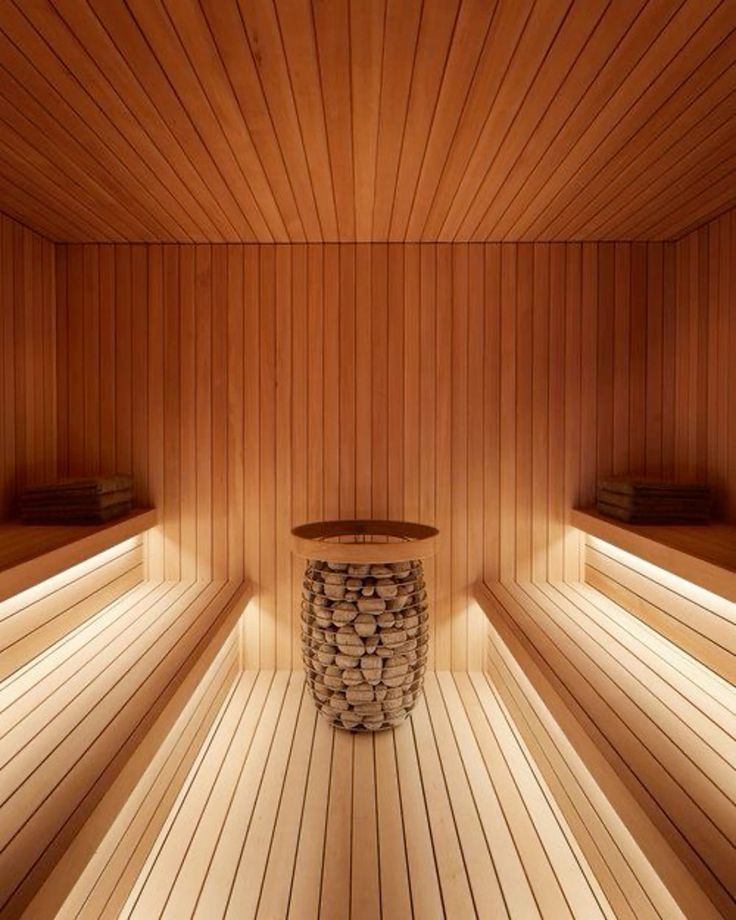
A traditional sauna needs no water line at all, even indoors, löyly is bucket-and-ladle, not plumbed. The build is a wood shell, insulation, a vapor barrier, and a heater. That's a simpler scope for a contractor to price and a simpler thing to add to a backyard structure with no plumbing anywhere near it.
Which one fits your project (and how Crateworks fits in).
A steam room makes the most sense next to a bathroom or wet room that already has plumbing run to it, adding a steam generator to a space that's already wired and waterproofed is a smaller lift than starting from nothing. A dedicated wellness room, a finished basement with no adjacent bath, or a backyard build favors a sauna, since there's no plumbing to extend in the first place.
Crateworks sources the cedar shell and materials for a traditional sauna, indoor or outdoor, from a flat-packed cabin up to a full wellness package spec'd to the space. The heater, a name-brand electric unit like Harvia, gets specified to the room and installed locally by a licensed contractor; we don't touch electrical. If the project calls for a steam room instead, we also source tile-ready steam enclosures, with the generator and plumbing staying with your local contractor the same way the heater does on a sauna.
A side-by-side on what actually decides it:
| Factor | Sauna | Steam Room |
|---|---|---|
| How it heats | Electric or wood heater plus a rock bed, dry air | Plumbed steam generator, saturated air |
| Temperature | 150 to 195°F | 110 to 120°F |
| Humidity | Low, except for a löyly steam burst | Close to 100% |
| Interior surface | Solid wood, unfinished | Full tile, sealed |
| Water line required | No, löyly is bucket and ladle | Yes, generator feed plus floor drain |
| Maintenance | Wipe down; duckboard lifts out to dry | Regular tile and grout cleaning to prevent mildew |
| Best fit | Dedicated room, indoor or outdoor, no plumbing nearby | Bathroom or wet room with plumbing already run |
Common questions.
- Is a sauna or a steam room better for you?
- Neither is universally better, they're different heat experiences. A sauna gives you high, dry heat with the option of löyly steam; a steam room gives you constant, saturated heat at a lower temperature. Preference comes down to whether you want dry heat you can sit in longer or an all-over humid heat. This isn't medical advice, if a specific health condition is part of the decision, talk to a doctor first.
- Does a steam room need a floor drain?
- Yes. A steam room is a sealed, waterproofed enclosure, and the floor has to be sloped to a drain to handle condensation and runoff during and after a session. A sauna doesn't need one; a traditional sauna uses no water at all except the water poured on the rocks for löyly, which mostly flashes to steam on contact.
- Can you build a sauna indoors without adding plumbing?
- Yes. A traditional, löyly-style sauna takes no water line even indoors, the water for steam is poured by hand from a bucket, not piped in. The floor still needs to be built right, a waterproof, sloped substrate with a removable wooden duckboard on top, but there's no plumbing scope the way there is for a steam room.
- Why doesn't sauna wood mold the way a steam room's grout can?
- The sauna's own heat, well above 150°F, bakes residual moisture out of the wood between sessions, and löyly only dampens the floor briefly since most of the water turns to steam on the hot rocks. Indoors, a removable wooden duckboard sits over a waterproofed, sloped floor and lifts out to dry, so the wood is never sitting in standing water the way tile grout can in a steam room.
- Which is cheaper to build, a sauna or a steam room?
- A traditional sauna shell is usually the simpler and less expensive build since it needs no water line, just a wood structure, insulation, a vapor barrier, and a heater. A steam room needs a plumbed steam generator, a floor drain, and full waterproofed tile, which adds both material and labor cost. That said, a steam room tucked next to plumbing that already exists can close some of that gap; get bids on your specific project before assuming either way.
Sources.
For general information only, not medical advice. Ask a clinician before starting regular sauna use.
Keep reading.
Deciding between a sauna and a steam room?
Send the space, indoor or outdoor, and we'll spec the cedar shell to it, heater included in the plan and installed locally, or point you to the steam enclosure option if that's the better fit for the room.