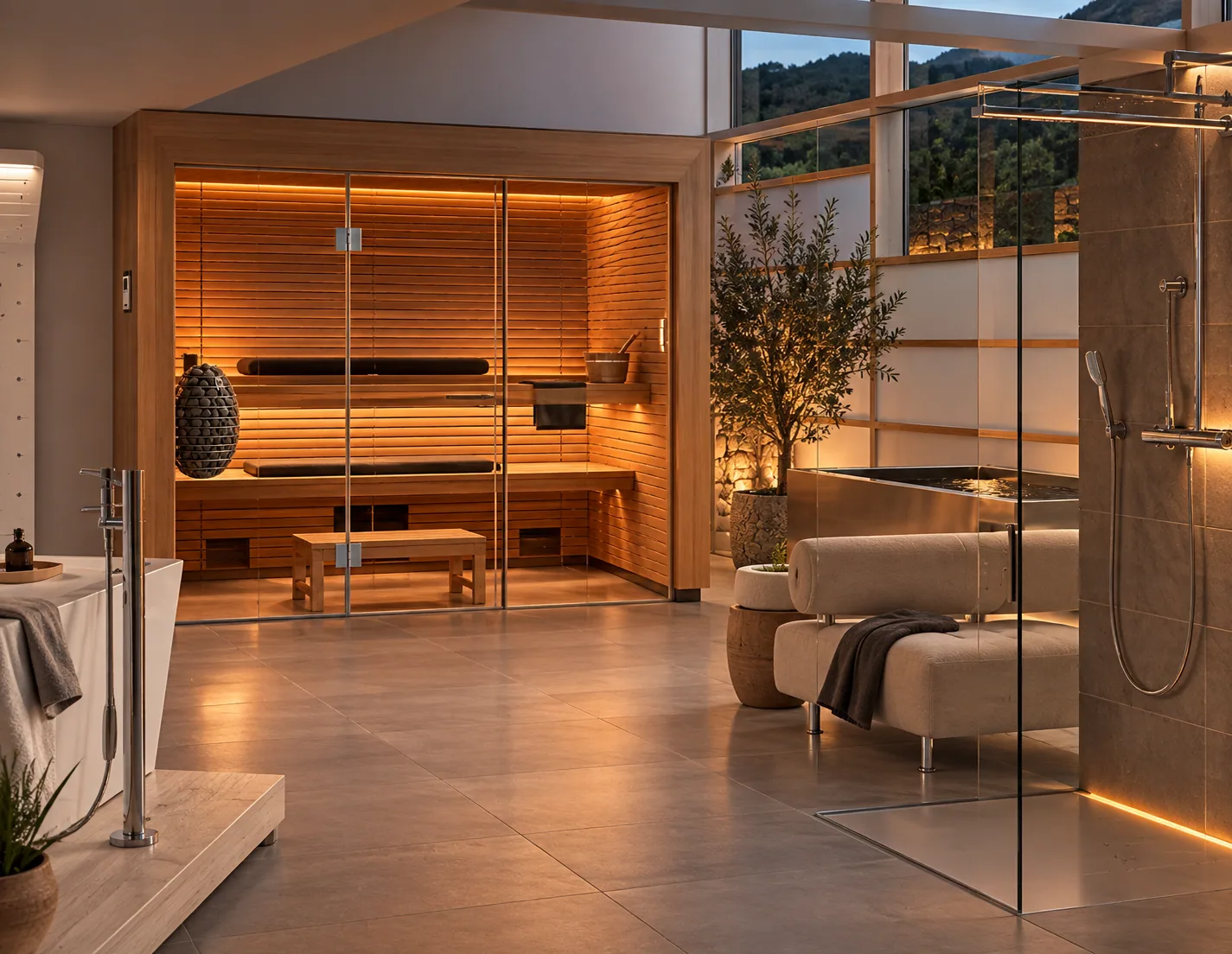
Indoor spa setting with a steel cold plunge beside a glazed sauna cabin, warm floor light

Cold plunge water, without chlorine.

We specify every plunge with a cartridge filter, ozone and UV. Here is what each part does, and what you still have to do.

By Charles Lau · Updated

Do you need chlorine in a cold plunge?

Not in the plunges we specify. A cartridge filter, ozone and UV treat the water as it circulates, with no chlorine to dose. You still change the filter and the UV lamp, test the water regularly, and change the water when it needs it.

What each part does

Cartridge filter.

Catches hair, skin and debris as the pump moves the water. It is the first stage, and the part you touch most often.

UV.

Treats the water as it passes the lamp. UV adds nothing to the water and leaves nothing behind in the tub. Cold water reduces lamp output, so the unit has to be sized for it.

Ozone.

Breaks down body oils and organics that UV does not touch, which helps keep the water clear between filter changes. It should run at low output, on a timer tied to the pump.
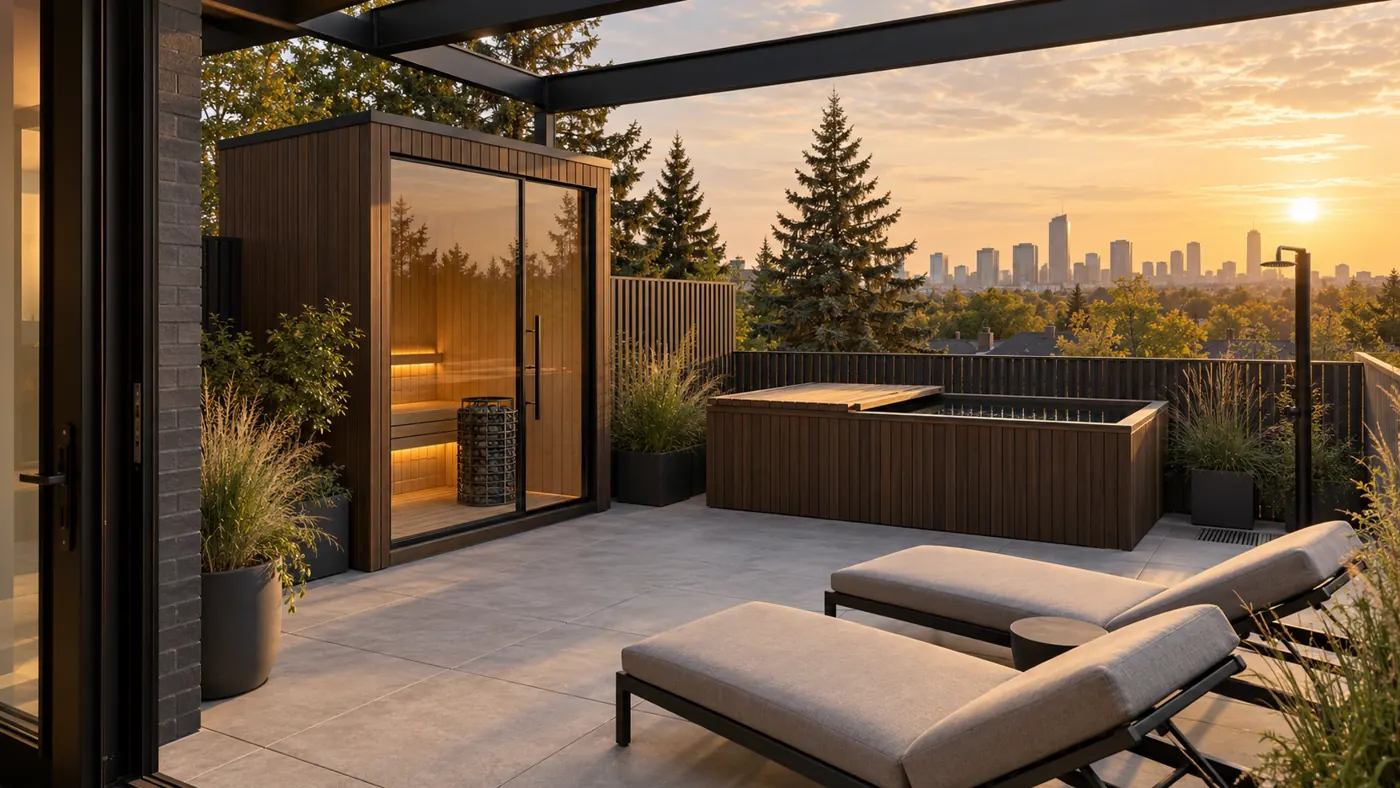
Rendering of a built-in timber cold plunge with a partly open lid on a roof terrace at golden hour
Rendering: a built-in plunge with its lid partly open.

Why the equipment gets planned with the room

On a built-in plunge, the filter, UV lamp and ozone unit sit behind the finish. You have to reach them for the life of the plunge. We plan them with the custom cold plunge, with removable panels at each service point, so a filter change never means pulling tile.

Comparing brands? See cold plunge prices in Canada, delivered.

Common questions

Not in the plunges we specify. A cartridge filter, ozone and UV treat the water as it circulates, with no chlorine to dose. You still change the filter and the UV lamp, test the water regularly, and change the water when it needs it.
We do not rely on it alone. Ozone breaks down fast in tap water and gives you no backup if the unit weakens, and the International Code Council says ozone generators should be paired with a registered sanitizer. We specify UV as a second stage, and you still test the water. Ozone on its own is the cheaper setup, and it is common on the market.
Plan for it. Low ozone output, a timer tied to the pump, a lid on when the plunge is idle and room exhaust all help. Talk to us about the room before you close in the walls.
This page is about private home plunges, not commercial ones. On commercial and shared plunges, local health rules can require a specific sanitizer, and owners may choose chlorine to limit liability. Check with your local authority first.
A UV lamp is typically a yearly change. The filter depends on how often the plunge is used.

Building a plunge into the house?

Send the room size, the power and the drain location, and we will quote it.

For the rest of the room