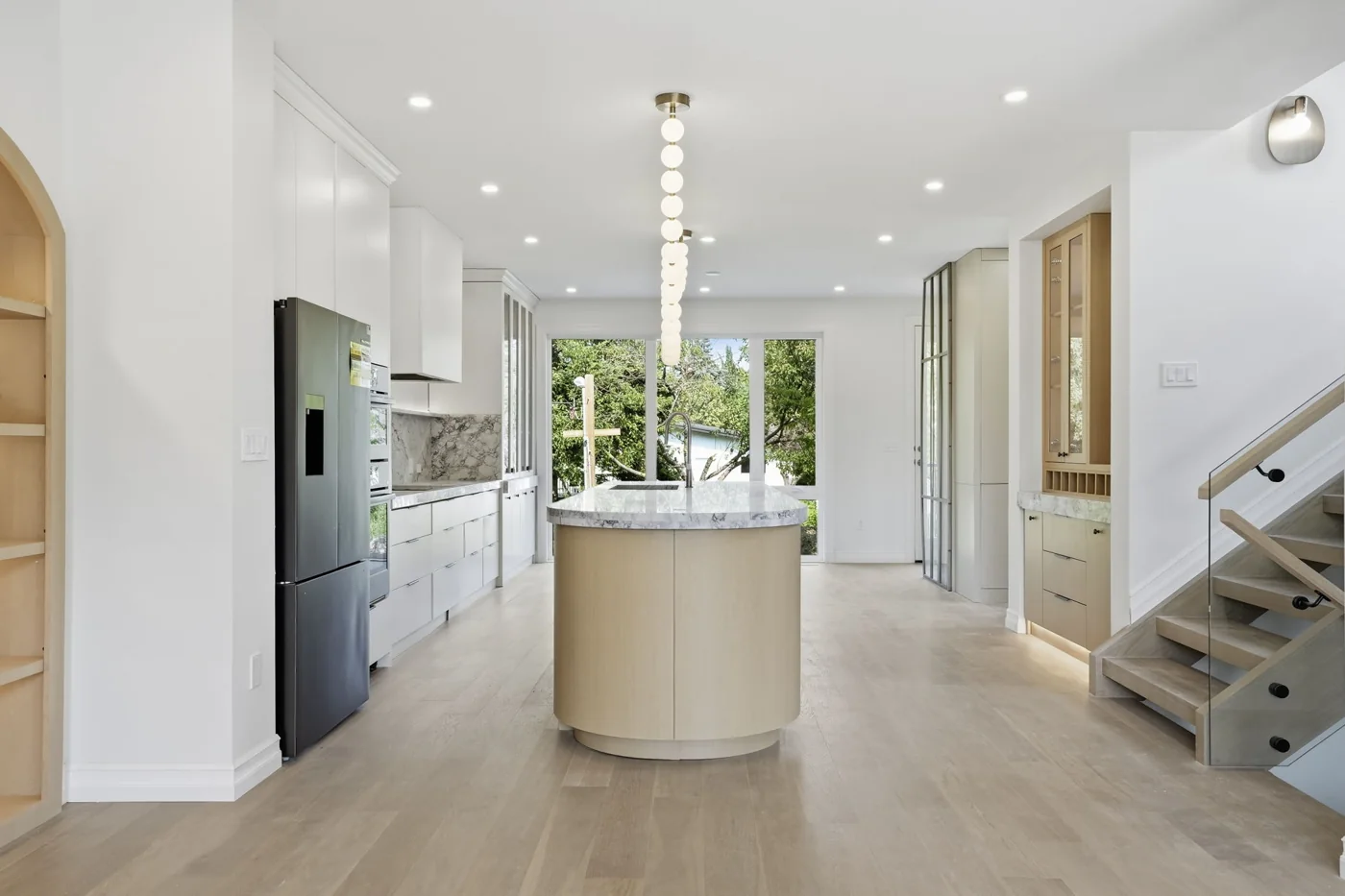
- A finish schedule lists every finish room by room: floor, base, walls, ceiling, cabinetry, doors, hardware, fixtures and lighting, with the material, colour, product and quantity for each.
- The designer or architect writes it. The builder prices and orders from it. The homeowner approves it, ideally before the job is priced.
- Each finish gets a short code, such as PT-1 for a paint or WD-1 for a wood floor, that matches the drawings. A legend on the schedule explains every code.
- A line left blank at bid has to be carried as an allowance. A line with a named product can be priced up front.
What is a finish schedule?
A finish schedule is a table, usually on the drawings or in a spreadsheet, that tells everyone on a project exactly what each surface is finished with. One row per room, one column per surface, and a code in each cell that points to a full description in the legend.
In interior design the schedule carries the look: the flooring, the paint colours, the cabinetry door style and finish, the tile, the stone, the hardware. In construction it becomes the shopping list and the order of work. It is the same document read two ways, which is why it matters that it is complete.
Doors, hardware, plumbing fixtures and lighting often get their own schedules on larger projects. On a custom home they are usually folded into one finish schedule, so a single document covers the whole interior.
What goes in a finish schedule?
Every row starts with the room number and name, so the schedule lines up with the floor plan. Then the surfaces: floor, base, each wall (some schedules split north, east, south and west), ceiling and ceiling height.
After the surfaces come the built-in items: cabinetry and millwork, doors and their hardware, plumbing fixtures and lighting. A last column holds notes, such as a feature wall, a change in tile pattern, or a finish that only applies to one wall.
For each code, the legend gives the material, the maker and product name, the colour or finish, the size, and the quantity. A schedule that names the product, not just the material, is one a builder can price without guessing.
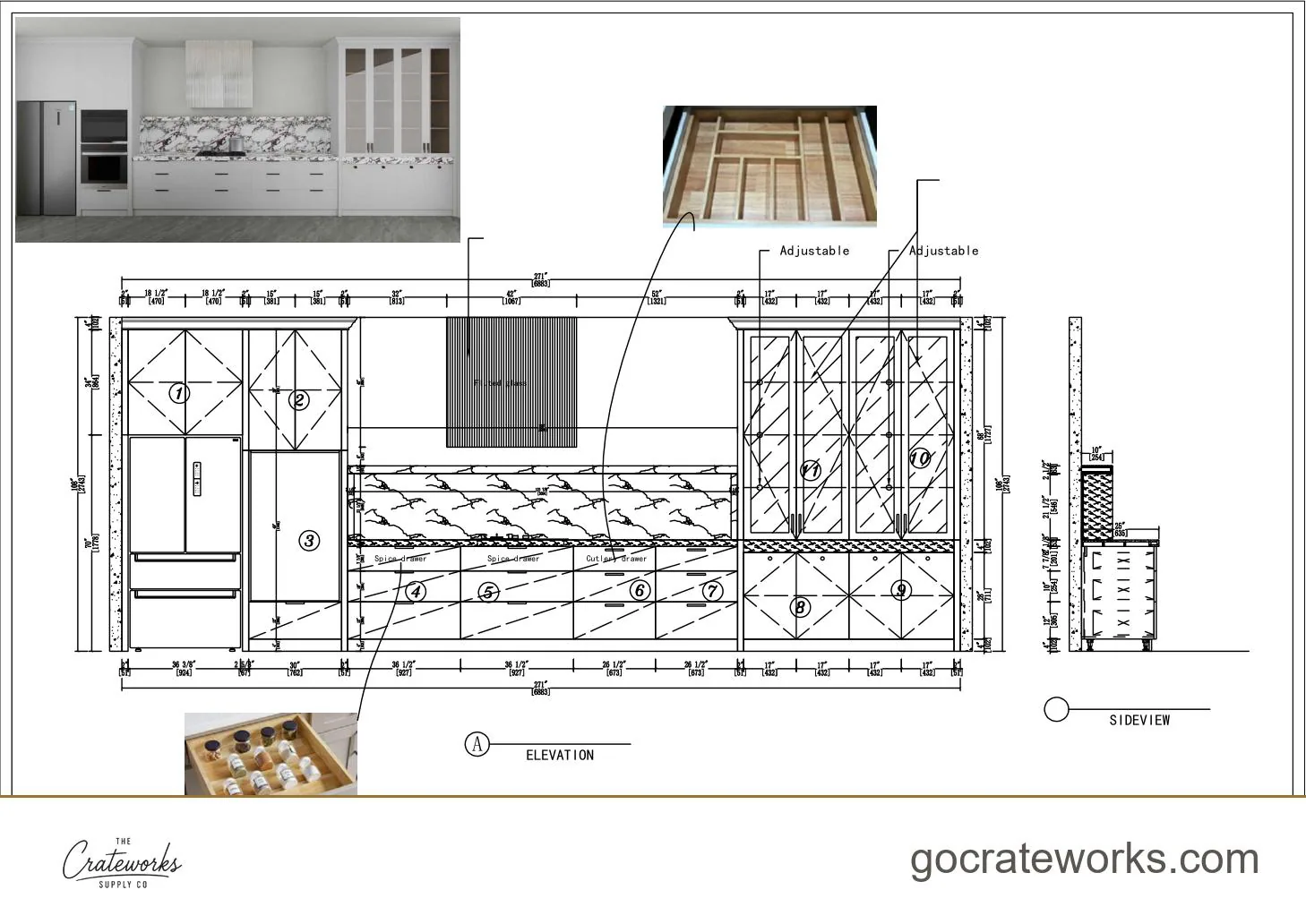
Finish schedule abbreviations and legend.
There is no single national standard for finish codes, so the legend on each schedule is the authority. Common codes include PT for paint, WD for wood, TL for tile, ST for stone, CPT for carpet, RB for resilient base, GWB for gypsum wallboard, ACT for acoustical ceiling tile, MW for millwork, PL for plastic laminate, QZ for quartz and HW for hardware.
A number after the code separates one version from another. PT-1 might be the wall colour throughout, PT-2 the trim, PT-3 the ceilings. WD-1 might be the white oak floor and WD-2 the walnut on the island. Whatever the system, the same code has to mean the same thing on every sheet.
Who writes the finish schedule, and who uses it?
The interior designer or architect writes it, usually during design development, and updates it as selections are made. On design-build projects the builder's own design team may own it.
The builder uses it to price the job, place orders, and book the trades in the right order. The homeowner reviews and approves it, room by room. Each of the three reads it for something different, and each one is exposed when a line is left open.
Why an incomplete finish schedule turns into allowances.
When a line on the schedule is still blank at bid, the builder cannot price a product, so it is carried as an allowance instead: a placeholder dollar amount for cabinets, tile, plumbing fixtures or lighting. If the product chosen later costs more than the allowance, the difference comes back as a change order.
A bigger allowance does not fix this. A complete schedule does: a real product and a real price on every line before the job is priced, and a selection deadline for anything that has to be ordered early.
Made-to-order items set those deadlines. Custom cabinetry, closets, doors and furniture need to be chosen and ordered well before install, so they belong at the top of the schedule, not the bottom.
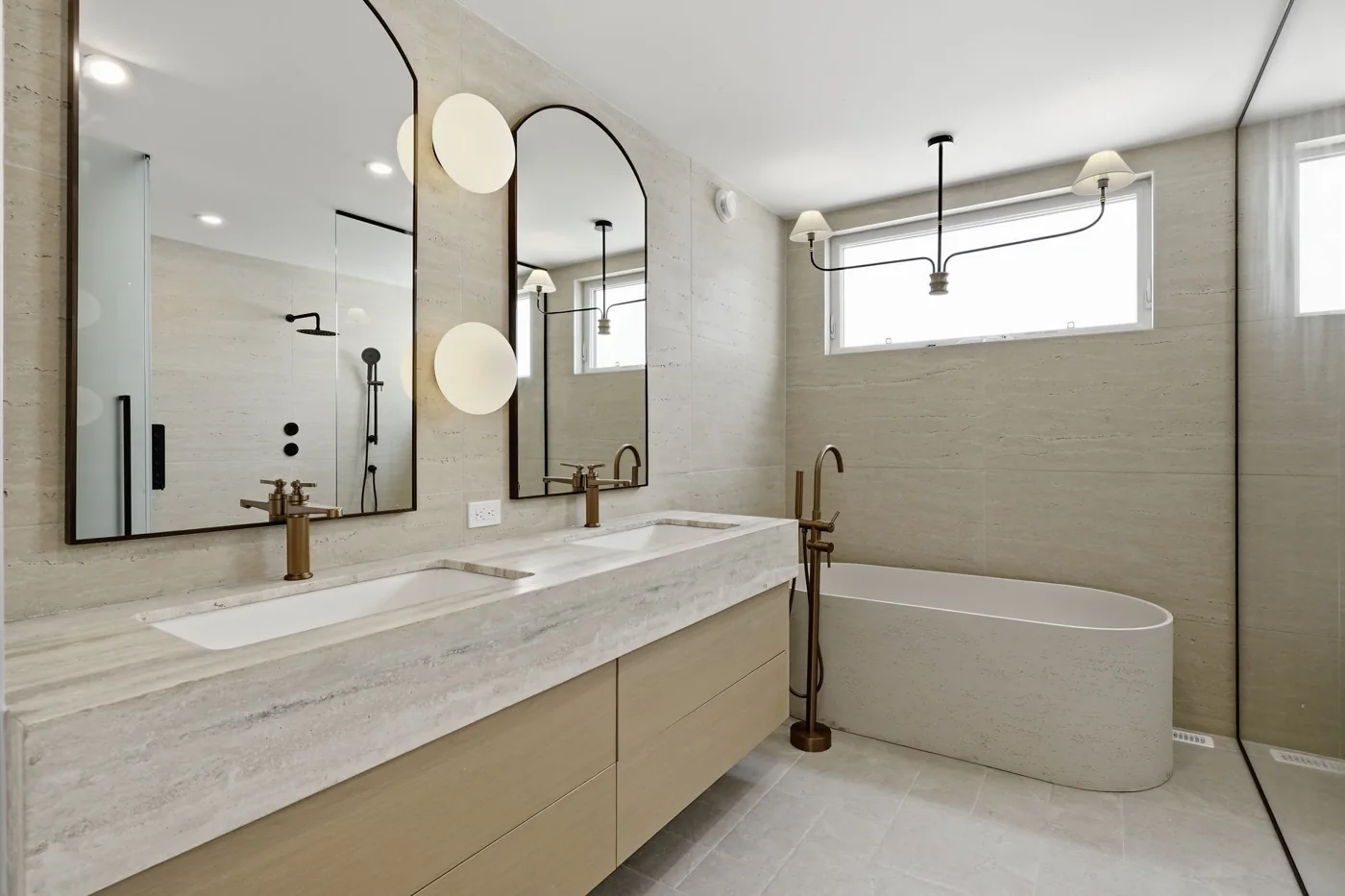
How Crateworks prices a finish schedule.
Crateworks custom-builds the made-to-order lines on a finish schedule: cabinetry and millwork, closets, doors, furniture, and metal and glass. One order covers the whole schedule, in one finish family.
Send the schedule or the drawings and you get a full line-item quote in 5 to 7 business days, priced in dollars against published retail, delivered in about 90 days. See a whole-home schedule priced against published retail.
Worked example: a finish schedule for three rooms of a custom home. Each code points to a legend line that names the exact product.
| Room | Floor | Base | Walls | Ceiling | Cabinetry and millwork | Doors and hardware | Notes |
|---|---|---|---|---|---|---|---|
| 101 Kitchen | WD-1 white oak | PT-2 painted | PT-1 | PT-3, 9 ft | MW-1 flat panel, MW-2 oak island | None | QZ-1 counters, ST-1 backsplash |
| 102 Mudroom | TL-1 porcelain | TL-1 cove | PT-1 | PT-3, 9 ft | MW-3 bench and uppers | DR-1 solid core, HW-1 lever | Upholstered bench seat |
| 201 Primary bath | TL-2 porcelain | TL-2 | ST-2 travertine, full height | PT-4, 9 ft | MW-4 floating oak vanity | DR-2 pocket door, HW-1 | Bronze fixtures throughout |
Common questions.
- What is the difference between a finish schedule and a selections list?
- A selections list is what the homeowner picks. A finish schedule is where those picks land, room by room and surface by surface, with codes that match the drawings. The selections feed the schedule, and the schedule is what the builder prices and orders from.
- What is a finish schedule in interior design?
- It is the designer's record of every finish in the project: flooring, wall and ceiling finishes, cabinetry, tile, stone, hardware and fixtures, each coded to the drawings with the product named. It is how the design gets built the way it was drawn.
- What does PT mean on a finish schedule?
- PT means paint. A number after it, such as PT-1 or PT-2, separates one paint colour or sheen from another, and the legend gives the exact product and colour.
- When should the finish schedule be complete?
- Before the builder prices the job. Anything still open at bid has to be carried as an allowance, and made-to-order items like custom cabinetry, closets and doors need to be chosen early enough to order and deliver before install.
- Who is responsible for the finish schedule?
- The interior designer or architect writes and maintains it. The builder prices and orders from it, and the homeowner approves it. On a design-build project the builder's design team may own it.
Keep reading.
Price your whole finish schedule
Send the schedule or the drawings. You get a full line-item quote in 5 to 7 business days, priced against published retail.