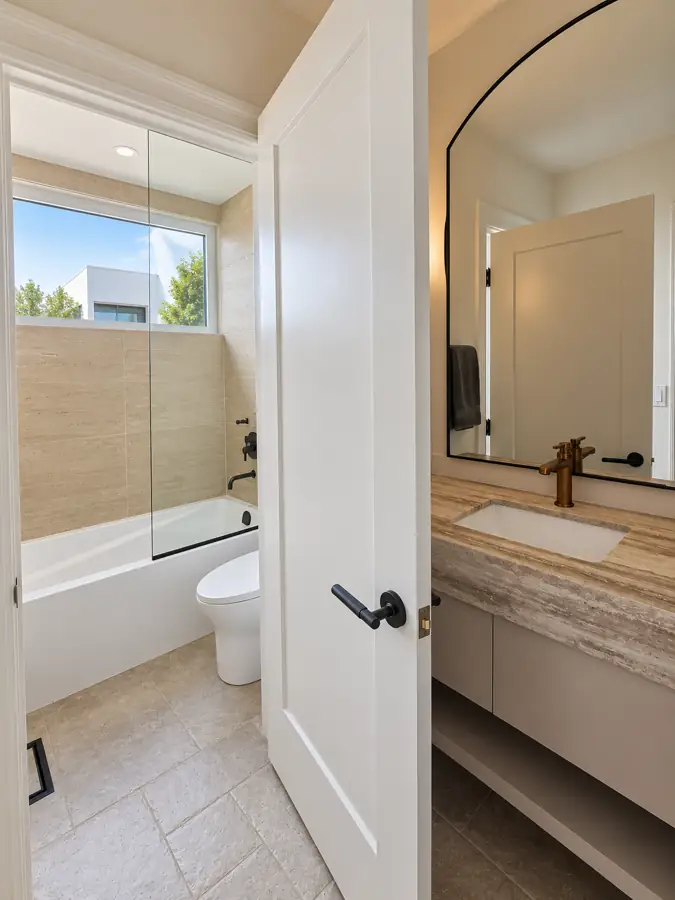
- An allowance is a placeholder in the contract for fixtures not yet chosen. If your picks cost more, the difference usually comes back as a change order.
- Ask whether the parts inside the wall, such as a concealed shower valve body, sit in the allowance or in the plumbing contract.
- Count every fixture bathroom by bathroom, pick the ones set at rough-in first, and send the sheet to be priced at least 90 days before rough-in.
How do allowances work in a construction contract?
When a builder prices a house before every product is chosen, the open lines are carried as allowances: a set amount for each category, such as plumbing fixtures, lighting or tile. The contract is signed with those placeholders in it, and the real cost is settled when you make your selections. Our post on what a finish schedule is explains why a line left blank at bid becomes an allowance.
If the fixtures you pick cost more than the allowance, the overage usually comes back to you as a change order. If they cost less, ask how the difference is credited. Homeowners often ask whether they pay only the amount over the allowance, and whether a fee applies to that overage. Both answers sit in your contract, so read that clause before selections start.
What does a plumbing fixture allowance cover?
Each contract draws the line in its own place, so ask for the list. The fixture lines on a bath package are the faucets, shower systems, tub fillers, toilets, basins and the bath hardware set. Ask where the parts set in the wall at rough-in, such as a concealed shower valve body, are counted: in the allowance or in the plumber's price.
The question to ask is about parts inside the wall. A concealed shower system has a valve body that goes in at rough-in, before the wall is boarded, and trim that goes on at the end. A wall-mount bathroom faucet works the same way: its in-wall body is placed at rough-in, before tile. Some tub fillers have a body set at rough-in too. Ask which contract each of those bodies sits in, because the answer changes what your allowance has to cover.
Also ask whether the allowance is per fixture, per bathroom or one figure for the whole house, and whether the vanity and its top sit in the plumbing line or with the cabinetry. A vanity is built 24 to 72 in wide to the plan, so ask which size the line assumed.
What is an average plumbing fixture allowance?
There is no useful average. The right number depends on how many fixtures the house has and which ones you pick. A house with one full bathroom and a powder room needs two toilets and two hardware sets; one with three full bathrooms and a powder room needs four of each.
What homeowners report is a pattern. In building forums, people comparing allowance sheets often say the plumbing and lighting fixture lines were the ones set furthest below what they ended up choosing. The allowance is written before the selections are, so it can only be an estimate.
Count the fixtures, bathroom by bathroom.
The quickest check on an allowance is a count. Walk the floor plan bathroom by bathroom and list every line: each basin gets a faucet, each shower a shower system, each tub a filler, and each room a toilet and a hardware set. The table on this page is a template. Use the full-bathroom column once for each full bathroom in your house and the powder-room column once for each powder room, then add them up.
Bath hardware is the easiest line to undercount. A full set is a towel bar or double towel bar, a towel ring at the basin, a robe hook or two and a toilet paper holder, with a towel shelf over the tub, a soap dish and a toilet brush holder as extras. Powder rooms drop the towel bar and keep the ring.
Then hold the total against the allowance and ask what each line was assumed to be.
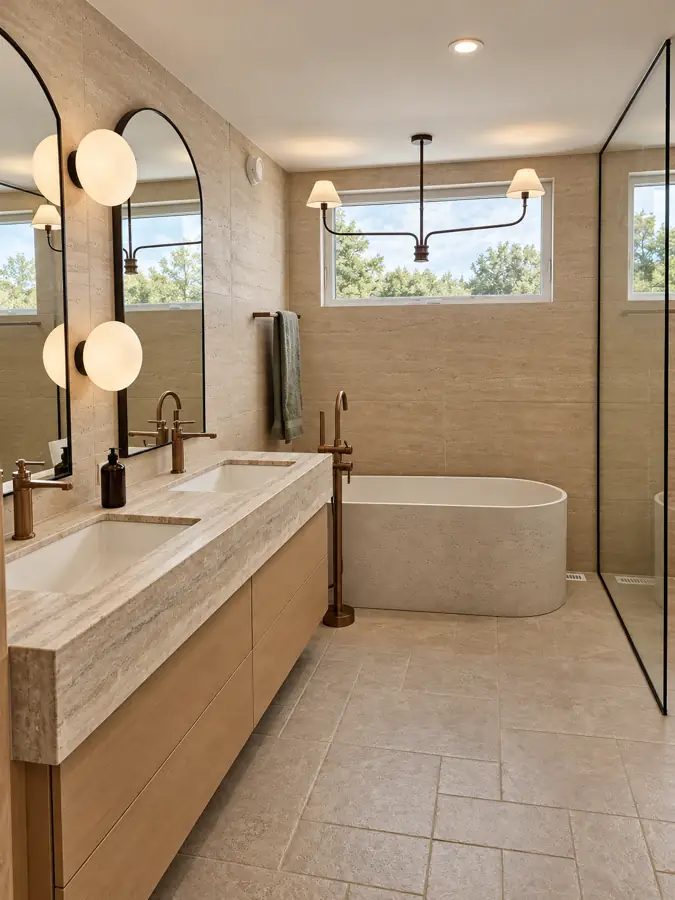
What should you ask your builder about the plumbing allowance?
Is the allowance per fixture, per bathroom, or one figure for the house? How many fixtures was it written for?
Do the in-wall parts, such as a concealed shower valve body or a wall-mount faucet body, sit in the allowance or in the plumbing contract?
If my picks run over, do I pay only the difference, and is there a fee on the overage? If they come in under, how is that credited?
What is the selection deadline for each fixture, working back from the rough-in date? Made-to-order fixtures take about 90 days, delivered. And if I bring the same spec priced elsewhere, how would you like to handle it?
Why decide plumbing fixtures before rough-in?
Some fixtures fix the plumbing. A concealed shower valve, a wall-mount faucet body, a tub filler supply, the toilet rough-in distance (12 in from the finished wall is the standard) and the outlet for a smart toilet all go in before the walls close, and the code calls for the rough inspection before anything is covered. Our guide to bathroom rough-in plumbing walks through each one.
Lead time sets the real deadline. Made-to-order fixtures arrive about 90 days, delivered, after the order, so a concealed shower system needs its schedule sent at least 90 days before your rough-in date. Put every pick on a new home selections checklist with a date against each line.
Send the allowance sheet and get the same spec priced.
Send your builder's quote or the allowance sheet, with your picks if you have them. We price the same spec, line by line, so you can compare it with what you have. Your builder stays in charge of the job.
One quote covers the whole bath package: faucets, shower systems, tub fillers, toilets, basins, tubs, vanities and bath hardware, in one finish through the house or one per bathroom. Your licensed plumber installs it.
A whole-house fixture tally. Use the full-bathroom column once for each full bathroom and the powder-room column once for each powder room, add the totals, and check the last column: those lines have to be decided before rough-in.
| Fixture line | Full bathroom | Powder room | Set at rough-in? |
|---|---|---|---|
| Bathroom faucet | One per basin | One | Wall-mount: yes, the in-wall body, before tile. Deck-mount: no, but pick the hole count before the counter is made |
| Basin | One per basin | One | No, but the mount type sets the vanity top cutout |
| Vanity | One per bathroom, 24 to 72 in wide; a double vanity counts once | One, or a wall-hung top | Floating: yes, blocking in the wall and higher pipe heights |
| Toilet | One | One | Yes, the rough-in distance: 12 in is the standard, 10 and 14 in exist. A smart toilet also needs an outlet |
| Shower system | One per shower or tub-shower | None | Concealed: yes, the valve body before the wall is boarded, so order it about 90 days ahead |
| Tub and tub filler | One per tub | None | Yes, the filler supply, and the body on designs that have one |
| Heated towel rack | One where wanted | Optional | Hardwired: yes, at electrical rough-in |
| Bath hardware set | Towel bar or double bar, towel ring, one or two robe hooks, paper holder; towel shelf over a tub | Towel ring and paper holder, no towel bar | Fitted at the end, but the towel bar and paper holder need blocking before drywall |
| Finish | One for the house or one per bathroom | Same choice | Before anything is ordered, about 90 days ahead of rough-in |
Common questions.
- What does fixture allowance mean?
- A fixture allowance is a set amount in a building contract for fixtures that have not been chosen yet, such as faucets, toilets and lighting. It holds a place in the price. When you make your picks, the real cost replaces it, and any overage usually comes back as a change order.
- What is an average plumbing fixture allowance?
- There is no useful average: it depends on how many fixtures your house has and which ones you pick. Count them bathroom by bathroom and get that spec priced against the allowance line, at least 90 days before rough-in.
- Does the plumbing allowance include the shower valve?
- It depends on your contract. A concealed shower valve body goes in at rough-in, before the wall is boarded, and the trim goes on at the end. Ask your builder whether the body sits in the plumbing contract or in the allowance, and order it about 90 days before rough-in.
- When should I pick my plumbing fixtures?
- Before plumbing rough-in for anything with a part in the wall: a concealed shower, a wall-mount faucet, a tub filler, the toilet rough-in and a smart toilet outlet. Made-to-order fixtures arrive in about 90 days, delivered, so work back from your rough-in date.
Sources.
Bathroom build checklist
Step 2 of 11
Choose
- 01New Home Selections Checklist: Bathroom and Plumbing
- 02Plumbing Fixture Allowance: Is Yours Enough?
- 03Builder Grade Bathroom: Upgrades to Lock In Before Rough-In
Measure
Rough-in
Inspect
Keep reading.
Get a quote
Have drawings or a builder's quote?
Send them. We price the same spec, line by line, so you can compare it with what you have. Your builder stays in charge of the job.
Send your plansOnly have the bathroom?
Send a photo and the measurements, including the distance from the wall to the drain. It comes back priced as one bath package.
Start with the bathroomBuilder or contractor?
Trade partners get a written schedule guarantee, Partner Credit on annual spend and pricing locked to delivery.
See trade termsSchedule terms
Price your bath allowance lines
Every bath line comes back on one quote, in the finish you pick, delivered in about 90 days.