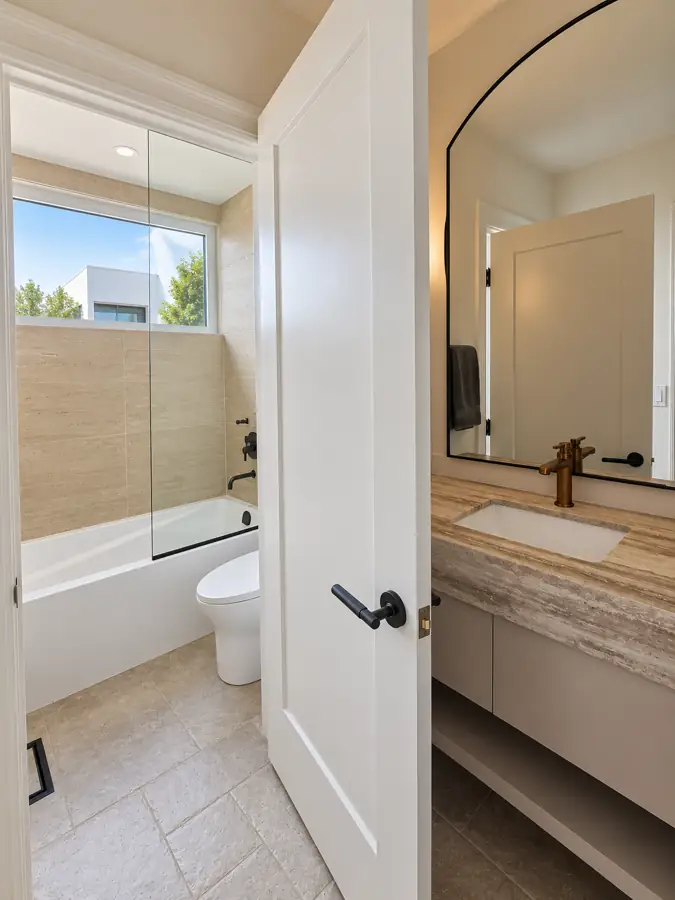
- An electric bidet seat or a smart toilet needs a receptacle near the toilet. Plan it with the water line, at rough-in.
- In the US, every bathroom receptacle needs GFCI protection. In Ontario, receptacles within 1.5 m of a sink, tub or shower do.
- The US code keeps receptacles out of a zone 3 ft out from a tub or shower. The 2023 edition allows one for a smart toilet or bidet seat inside it, on the side of the toilet away from the tub.
- Tell the electrician before rough-in, with the model and its install sheet in hand.
Do I need an electrical outlet for a bidet?
Yes, if the bidet runs on electricity. An electric bidet seat, or a smart toilet with the wash, heated seat and dryer built in, plugs into a receptacle near the toilet. That spot is easy to miss on a plan, and it often sits close to the tub, where the code is strict.
Tolland, the smart toilet in the Crateworks range, is built for 120V power. The heated seat, warm water and dryer run on electricity, so its outlet is planned at rough-in, with the water line.
Check the power draw on the toilet's nameplate or install sheet and give it to your electrician. It decides the circuit.

Do all outlets in a bathroom need to be GFCI?
In the US, yes. The National Electrical Code requires GFCI protection on every receptacle in a home bathroom. The 2023 edition defines a bathroom as an area with a sink plus a toilet, tub, shower, bidet or similar fixture, so a receptacle placed for a smart toilet or bidet seat is covered.
GFCI means ground-fault circuit interrupter.
Bathroom receptacles run on a 120-volt, 20-amp circuit. Where that circuit serves a single bathroom, the 2023 code lets it feed other equipment in the same bathroom. Whether a smart toilet shares it or gets its own is your electrician's call, made from the nameplate.
Bidet outlet location and height.
The US code draws a zone around every tub and shower: 3 ft out from the tub rim or shower threshold, measured horizontally, and 8 ft up from it, including the space directly over the tub or shower. No receptacle may go inside it. In a small bathroom, one is allowed on the wall farthest from the tub or shower.
The toilet often sits right beside the tub, inside that zone. The 2023 edition added an exception for exactly this case: a single receptacle for an electronic toilet or bidet seat may go inside the zone, on the side of the toilet away from the tub or shower, GFCI protected and easy to reach. An earlier 2020 amendment also allowed the wall behind the toilet, but not behind the tank.
For Tolland, plan the outlet with the water line. The code sources here set where a receptacle may go, not a fixed height, so agree the spot with your electrician and mark it on the wall before rough-in.
Seen from the bathroom door, looking into the corner, with the two near walls and the drywall taken away.
- Outlet box
- No-receptacle zone
- Tub and toilet
- Cut open to show inside
- The zone: 3 ft out from the tub, measured horizontally from the rim, and 8 ft up from the rim, including the space over the tub. No receptacle may go inside it.
- The 2023 exception: one receptacle for an electronic toilet or bidet seat may go inside the zone, on the side of the toilet away from the tub. It must be GFCI protected and easy to reach.
- Not here: the side of the toilet next to the tub.
Bidet outlet code requirements: US and Canada.
The table below sets the US rules beside Ontario's. Your electrician and inspector work from the edition your area adopted, and some towns amend it.
In Ontario, the provincial version of the Canadian Electrical Code requires GFCI protection on receptacles within 1.5 m of a sink, bathtub or shower stall. Bathroom receptacles go at least 1 m from the tub or shower where practicable, and never closer than 500 mm, measured horizontally without going through a wall. Other provinces follow the Canadian Electrical Code with their own amendments, so ask your electrician.
Built-in smart toilet or bidet seat: what changes for the outlet.
Both need power, so both need the receptacle. An add-on bidet seat replaces the seat on a toilet you already have, so it is easy to decide on it after move-in and find there is nowhere to plug it in. If a seat is even a maybe, have the receptacle put in now. Before drywall it is one more box on the electrical plan.
A built-in smart toilet is one piece, chosen at selections, so the receptacle goes on the plan from the start. Tolland comes floor-standing or wall-hung, both with the tank built in. The floor-standing model has a backup battery that keeps it flushing in a power outage. Compare both on the toilets page.
On a bath package quote, the smart toilet is one line beside the vanities, faucets and showers, made to order and delivered in about 90 days.
When to tell the electrician.
Before electrical rough-in. The rough inspection of plumbing and electrical happens before anything is covered, so the box has to be in the wall by then. After drywall, adding one means opening the wall.
Bring three things: the model you picked, its install sheet with the power draw, and the floor plan showing where the toilet sits next to the tub or shower. Then check the box on your pre-drywall inspection checklist walk. The water side of the same toilet is covered in bathroom rough-in plumbing.
Pick the toilet early. It is made to order and delivered in about 90 days, so choosing it before rough-in lets the outlet, the water line and the toilet line up the first time.
Where the receptacle for a bidet seat or smart toilet can go. Your electrician and inspector work from the edition your area adopted.
| Rule | United States (National Electrical Code 2023) | Ontario (Canadian Electrical Code, Ontario 2024 edition) |
|---|---|---|
| GFCI protection | Every receptacle in the bathroom | Receptacles within 1.5 m of a sink, bathtub or shower stall |
| Distance from tub or shower | None within 3 ft horizontally and 8 ft vertically of the tub rim or shower threshold | At least 1 m where practicable, never less than 500 mm, measured horizontally |
| Receptacle for a smart toilet or bidet seat | One allowed inside that zone, on the side of the toilet away from the tub or shower, GFCI protected and easy to reach | Ask your electrician; provinces amend the code |
| Bathroom circuit | 120 volts, 20 amps; may feed other equipment when it serves one bathroom | Ask your electrician |
Common questions.
- Does a bidet need a GFCI outlet?
- Yes. In the US, every bathroom receptacle needs GFCI protection, and the 2023 exception for a toilet or bidet receptacle repeats it. In Ontario, any receptacle within 1.5 m of a sink, tub or shower needs it. Other provinces amend the Canadian Electrical Code, so confirm with your electrician.
- Where should the outlet for a bidet go?
- Behind or beside the toilet, at a spot you agree with your electrician before rough-in. If the toilet sits within 3 ft of a tub or shower, the 2023 US code allows one receptacle there, on the side of the toilet away from the tub or shower, GFCI protected and easy to reach.
- Can a bidet outlet go behind the toilet?
- Yes, when the toilet is clear of the zone around the tub or shower. Inside the zone, the 2023 US code puts the receptacle on the side of the toilet away from the tub or shower. An earlier 2020 amendment allowed the wall behind the toilet, but not behind the tank.
- Does a smart toilet need a dedicated circuit?
- Not always. Bathroom receptacles run on a 20-amp circuit, and where it serves one bathroom the 2023 US code lets it feed other equipment in that bathroom. Whether the toilet shares it depends on its power draw, so give your electrician the nameplate or install sheet.
- Can I add a bidet outlet after drywall?
- Yes, but it means opening the wall, patching and repainting, and the spot still has to meet the rules around the tub and shower. Before drywall it is one more box on the electrical rough-in. If a bidet seat is even a maybe, have the receptacle put in now.
Sources.
- National Electrical Code 2023, 210.8 (bathroom GFCI protection), summary by Mike Holt
- National Electrical Code 2023 errata 70-23-1 (bathroom branch circuits)
- EC&M: the evolution of bathroom branch circuit requirements
- National Electrical Code 2020, 406.9 (receptacles near tubs and showers), summary by Mike Holt
- EC&M: receptacle requirements in the National Electrical Code
- IAEI Magazine: significant changes to the 2023 National Electrical Code (toilet and bidet receptacle)
- EC&M: 2020 amendment on receptacles near bathtub and shower spaces
- Electrical Safety Authority (Ontario) Bulletin 26-29-6 (GFCI near sinks, tubs and showers)
- Electrical Safety Authority (Ontario) Bulletin 26-26-6 (bathroom receptacle distance from tub or shower)
- International Residential Code 2021, Section R109.1.2 (rough inspection before covering, state-adopted text on UpCodes)
Bathroom build checklist
Step 10 of 11
Choose
Measure
Rough-in
- 06Bathroom Rough-In Plumbing: What to Decide First
- 07Shower Valve Rough-In for a Concealed Shower
- 08Bathroom Sink Drain Height and Vanity Rough-In
- 09Wall-Hung Toilet Carrier: What Goes in the Wall
- 10GFCI Outlet for a Bidet or Smart Toilet: Where It Goes
Inspect
Keep reading.
Get a quote
Have drawings or a builder's quote?
Send them. We price the same spec, line by line, so you can compare it with what you have. Your builder stays in charge of the job.
Send your plansOnly have the bathroom?
Send a photo and the measurements, including the distance from the wall to the drain. It comes back priced as one bath package.
Start with the bathroomBuilder or contractor?
Trade partners get a written schedule guarantee, Partner Credit on annual spend and pricing locked to delivery.
See trade termsSchedule terms
Add the smart toilet to your bath
Send the plan or your builder's quote. The bath package is priced line by line, smart toilet included, and delivered in about 90 days.